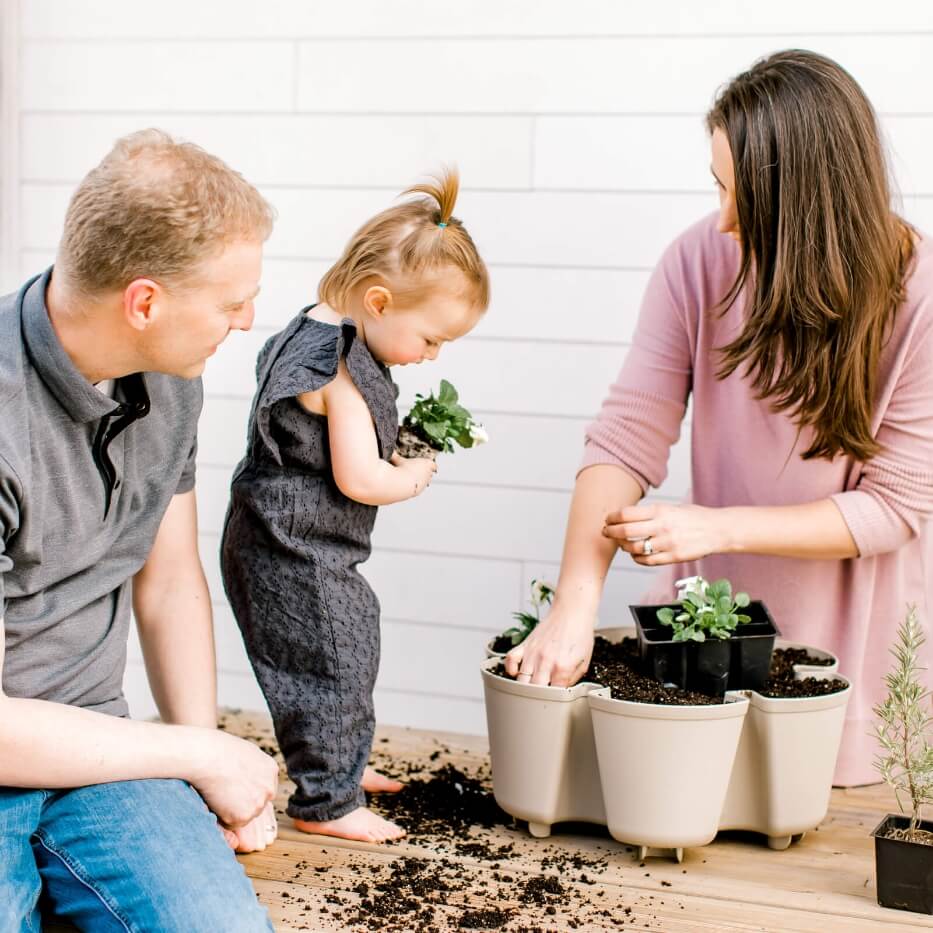

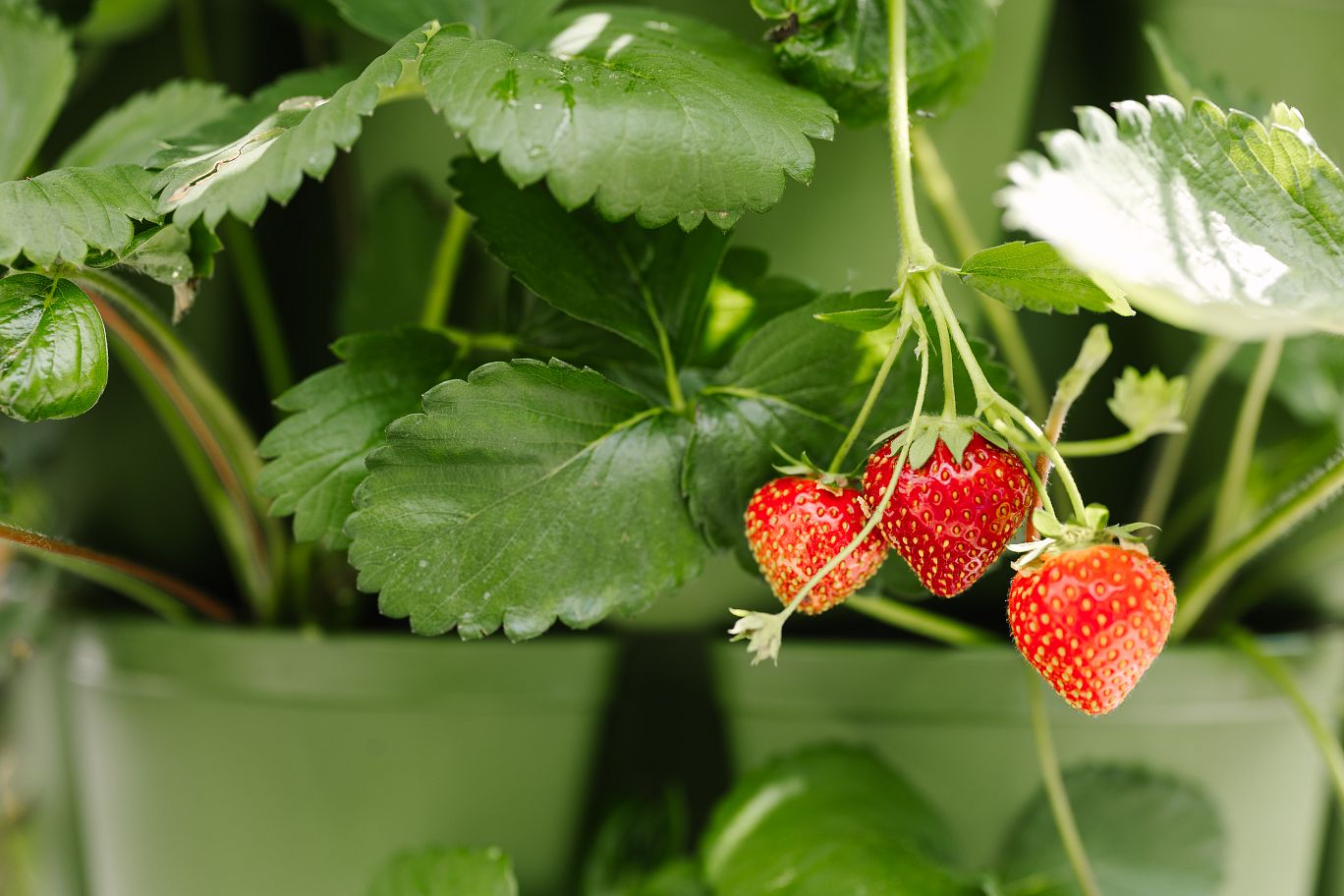

Strawberries are one of the most popular plants to grow in a GreenStalk Vertical Planter, and for good reason! They're relatively low-maintenance, and in most areas you plant them once and they come back year after year. Kids love growing them, and more importantly, harvesting them.
There's another reason to grow your own: strawberries consistently rank near the top of the "Dirty Dozen" list. Strawberries from the grocery store are more likely to carry pesticide residue than almost any other produce. Growing them at home puts you in control of what goes on your plants, and what ends up on your table.
In this guide, we'll walk you through everything you need to know, from choosing your planter and planting bare roots all the way through harvest and overwintering.

Strawberry Fast Facts
Cool or warm weather: Cool to warm season
Size: Small
Sun: 6-8 hours daily
Days to mature: 28-35 (from flower to fruit)
Water: Consistent moisture; avoid overwatering
Original or Leaf GreenStalk: Both; Original preferred for colder zones
GreenStalk level: Any tier
Overwinters: Yes — Zone 4+ with protection; Zone 6+ with minimal care
Plant lifespan: 3-5 years

Why Grow Strawberries from Bare Root?
While starter plants are an option, we highly recommend growing strawberries from bare roots.
Bare-root strawberries give you more control over the varieties you grow, access to a wider range of flavors, sizes, and types — from sweet to tart, small to large — and far greater transparency than starter plants from big box stores, which are often unlabeled or unclear about variety.
Preparing your bare roots:
Before planting, soak bare roots in water for about 30 minutes. Always follow any specific instructions included with your plants. Keep them cool and moist in the meantime. Bare roots can be stored in the refrigerator for up to two weeks, so don't feel rushed.
Strawberry Types: Which Should You Grow?
Understanding the type of strawberry you're growing sets realistic expectations for harvest timing, fertilizing, and long-term plant care. Before purchasing, consider your growing zone and how hardy you want your plants to be.

June-Bearing Strawberries
June-bearing varieties produce one large, concentrated harvest — typically in late spring or early summer over about a six-week window. They're done for the season after that. If they produce flowers or runners, they should be pruned, so the plant can put its energy into establishing a healthy root system. These varieties don't produce well in their first year; their second year is when they really shine. When you're growing June-bearers, patience pays off.
Everbearing Strawberries
Everbearing varieties produce smaller, steadier harvests over a longer period, often fruiting in multiple waves throughout the season. In Zone 7 (at GreenStalk HQ in Knoxville, TN), that can mean a consistent harvest of medium-sized berries from about May through October. If you want fruit sooner and more often, everbearing is a great place to start.
Planting & Growing
Choose Your GreenStalk
Strawberries grow successfully in both the Original Vertical Planter and the Leaf Vertical Planter. For most gardeners, the 7-Tier Leaf Vertical Planter is an excellent choice. In colder zones (Zone 5 and below), the Original GreenStalk Vertical Planter's deeper pockets provide better root insulation through winter.
Soil & Nutrition
Use a high-quality, lightweight potting soil or mix. For added nutrition, mix in granular fertilizer and worm castings before planting. This gives your strawberry plants a strong, healthy foundation from day one.
Planting Strawberries Correctly
One of the most important steps when planting strawberries is not burying the crown.
The crown is the part of the plant where the roots meet the leaves. If it gets buried under soil, it can die from lack of sunlight.
How to plant:
Hold the crown even with the rim of the planter pocket
Gently separate the roots
Make a small trench for the roots to lie in
Cover the roots with soil while keeping the crown exposed
If the crown ends up too low, gently pull the plant upward and refill soil around it
Plan on one strawberry plant per pocket. This spacing allows roots to develop properly and supports healthier, more productive plants.

Watering After Planting
Water the planter pockets well for the first couple of days after planting. Soon you'll see your strawberry plants begin "waking up" — leaves turning green as they establish themselves. If some plants green up faster than others, don't worry. Not every crown grows at the same pace.
Fertilizing
Because granular fertilizer is mixed into the lower portion of the soil at planting, additional feeding isn't typically necessary early in the season. As the season progresses:
June-bearing strawberries: Apply a balanced fertilizer once early in the season and again after they finish fruiting.
Everbearing strawberries: Apply a balanced fertilizer every 4-6 weeks throughout the growing season.
Avoid using high-nitrogen fertilizers, which can lead to beautiful green leaves but fewer berries. Balanced or phosphorus-leaning fertilizers are best during production.

Working with Runners
Runners are long shoots that grow from the main plant and eventually develop into new strawberry plants. They tend to appear once plants are established and become more common as temperatures warm. What you do with your runners depends on your goals:
Remove runners if you want to focus the plant's energy on fruit production, or if your plants aren't yet fully established.
Root runners if you want to propagate new plants — and this is where the GreenStalk Berry Cup comes in
Introducing the Berry Cup
The Berry Cup is a specially designed propagation cup made to attach to the outside pockets of a GreenStalk Vertical Planter. Designed with strawberries in mind, it makes rooting runners easy, organized, and space-efficient.
Sold in a set of six, each cup features a drainage hole and flat bottom for stand-alone use. Using the Berry Cup takes your strawberry capacity to the next level! The Berry Cup launches April 1, 2026.
How to use it:
Fill the Berry Cup to the top with moistened potting soil/mix.
Attach it to a pocket near a healthy strawberry runner.
Place the part of the runner with leaves and root nodes on top of the soil. Cut off any secondary runners past the root node.
Gently pin the stem down with a garden pin, hair pin, or paper clip.
Leave attached to the mother plant for 2–3 weeks while roots form and keep the daughter plant well-watered. Once established, snip the runner and transplant into an empty pocket (or share with a friend)!

Pest Awareness & Prevention
Regularly inspect your strawberry plants, especially the undersides of leaves. Common pests and critters to watch for include Japanese beetles, spittlebugs, birds, and ground squirrels.
Neem oil spray is effective against many pests and some diseases. Pinwheels in the top pockets of your planter can help discourage birds and (some) squirrels. Early intervention makes a significant difference. Don't wait until you see major damage to act.
Harvesting
When harvest time arrives, pick berries when they are fully red. Harvest regularly to encourage continued production throughout the season. With everbearing varieties in most zones, that means checking your planter every few days during peak season.

Overwintering Your Strawberries
As the growing season winds down, it's time to start thinking about protecting your plants through winter. Strawberry plants are more cold-hardy than most gardeners expect — they can tolerate temperatures in the upper 20s °F when in containers. Once temperatures regularly dip into the lower 20s, it's time to take action.
Fall Cleanup
As leaves begin to turn and plants slow down:
Trim and clean up plants as leaves change color
Remove dead or damaged foliage
Leave healthy crowns intact
Overwintering by Zone
Colder Growing Zones (Zones 3-5)
Additional protection is essential once plants go dormant. Options include:
Moving the planter into an unheated garage or shed
Moving the planter close to your home for added warmth
Wrapping the planter with a GreenStalk Frost Cover, bubble wrap, or burlap — double or triple wrapping provides extra protection
Adding straw to each pocket to help insulate roots and hold in moisture.
Keeping the soil lightly moist throughout the winter to support existing root structures.
Tip: In colder zones, the Original GreenStalk Vertical Planter's deeper pockets can better insulate roots during winter.
Warmer Growing Zones (Zones 6-7+)
In warmer climates, GreenStalk planters can typically remain outside all winter. Minimal protection may be needed during occasional cold snaps.


Using the Frost Cover
The GreenStalk Frost Cover is an excellent option for added winter protection:
Provides up to 8°F of temperature protection
Use during freezing conditions
Remove once temperatures rise consistently above freezing — keeping it on during warmer temperatures can pull plants out of dormancy prematurely
Winter Watering
Even during dormancy, strawberries need some moisture. Water occasionally to keep the soil slightly moist, continuing until winter cold freezes the soil solid. Avoid overwatering during this period.
Plant Longevity & What to Expect Year Over Year
Even with excellent winter care, not every strawberry plant will survive the season — a typical survival rate is 85-95% year after year. Depending on the variety, strawberry plants generally produce well for 3-5 years before needing to be replaced.
Keep in mind: June-bearing plants won't produce as well in their first year. Give them the right environment to establish, and the second year is when the harvest really delivers.

Frequently Asked Questions
Why are my strawberries small or misshapen?
This is usually due to poor pollination. Weather, lack of pollinators, or early-season blooms can all affect berry shape and size.
Why am I not getting any berries?
A few possible causes: young plants may be focusing energy on root and leaf development; excess nitrogen can discourage fruiting; insufficient pollination can reduce yield; and if you're growing June-bearing varieties, they simply don't produce well in their first year. The second year is when they come through.
Should you remove first-year blooms?
There's genuine debate on this one. Many professional strawberry growers recommend removing first-season blooms for June Bearing and a few blooms in the first two weeks or so for Everbearing while they’re getting established to encourage stronger plants and a better long-term harvest. Others allow the blooms to develop for a small first-year yield. Either approach can work — it depends on your priorities.
Why did my strawberry plants die over winter?
The most common culprits are plants freezing in dry soil. Being in a container, the roots are much more vulnerable to the cold. Variety can certainly play a role in their survivability.
From bare root to berry season, growing strawberries in a GreenStalk is one of the most satisfying things you can do in a vertical garden. And with the Berry Cup, it's never been easier to give your plants exactly the start they need. Get them planted, keep them happy through the seasons, and they'll reward you with more fresh berries than you can eat, year after year.