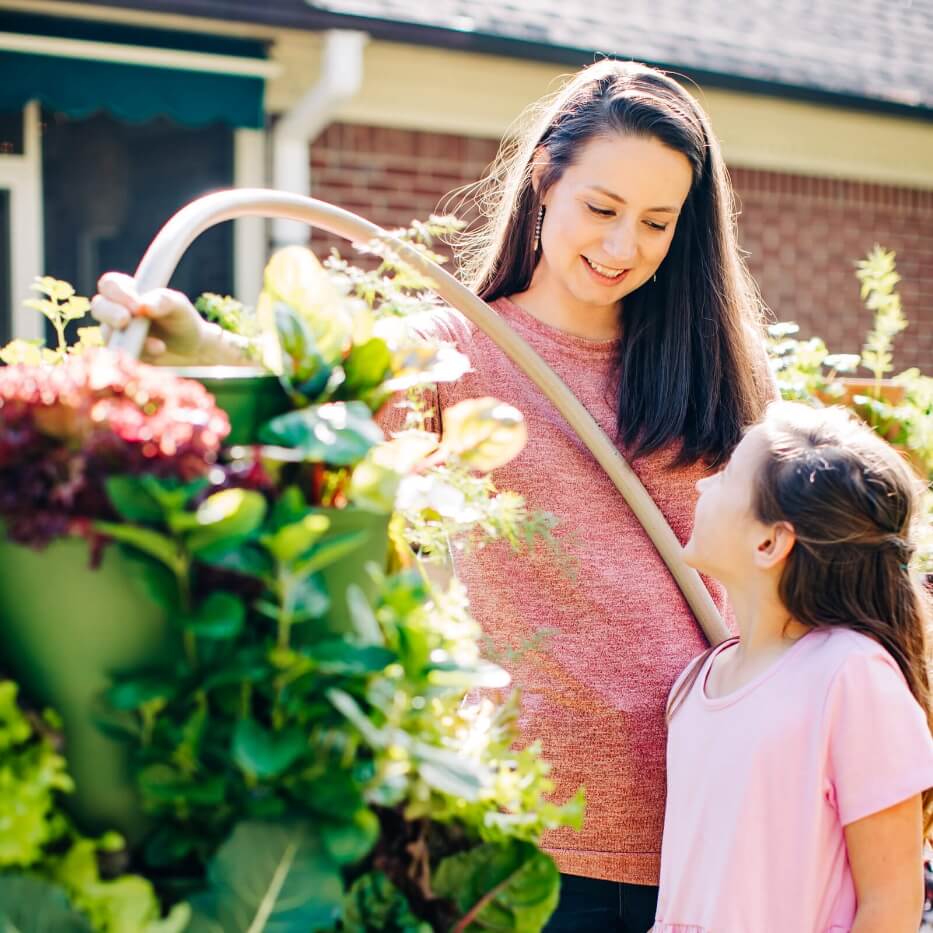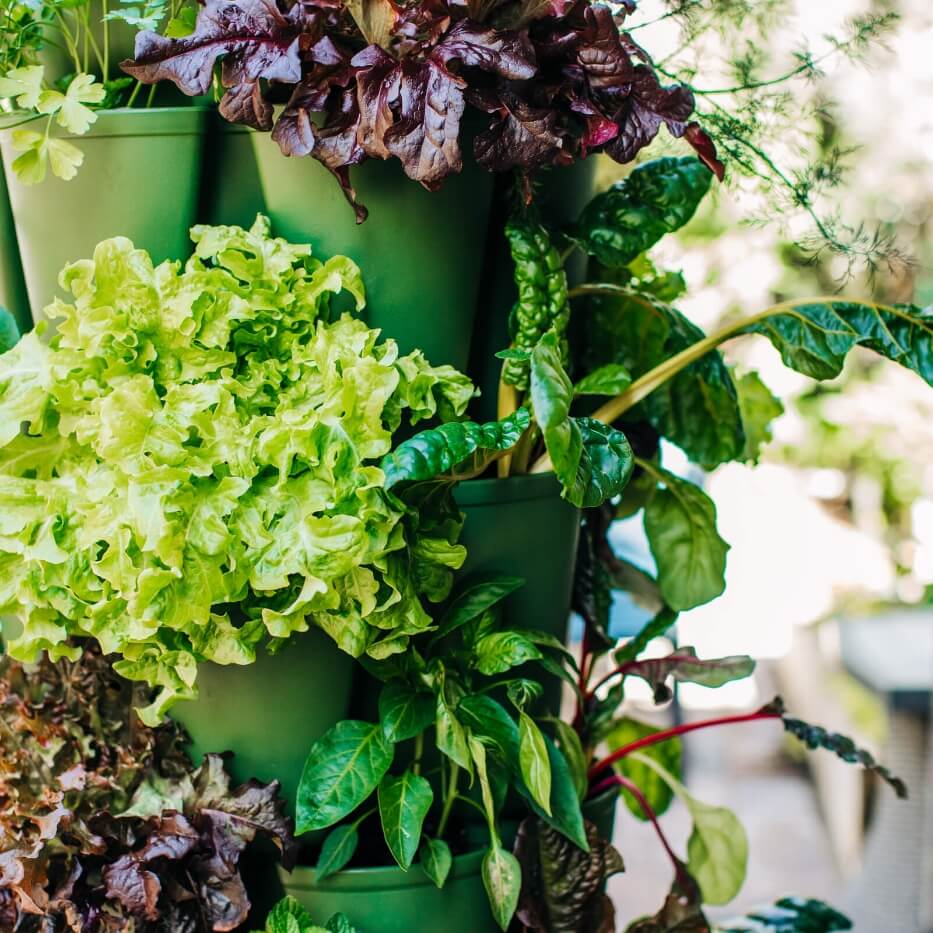


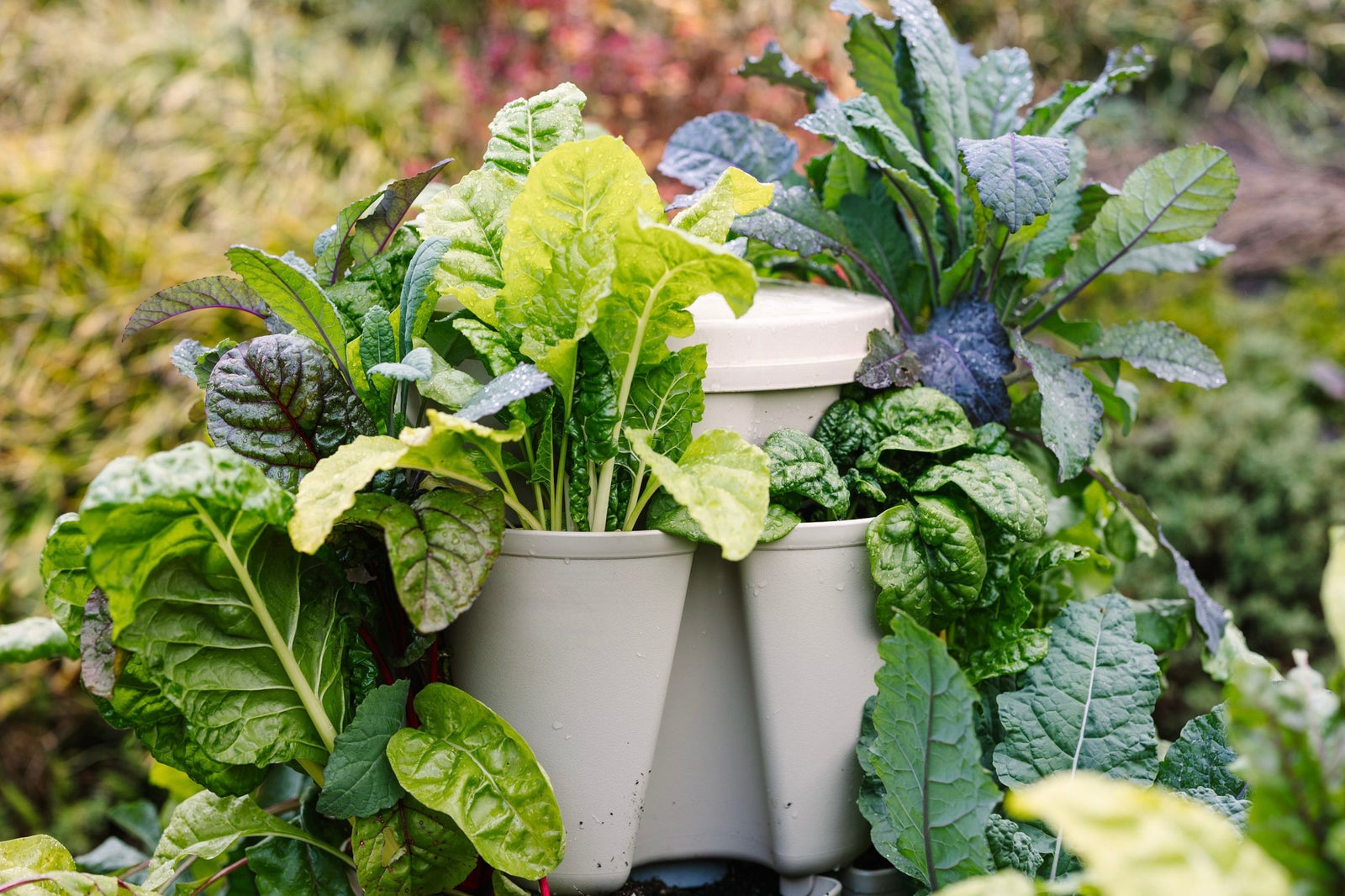

October planting varies depending on where you live, but there’s still something for everyone to plant this month! In the South, it's one of the best growing seasons of the year. Farther north, it's the month for garlic, hardy greens, and crops that settle in now and take off in spring.
Find your USDA hardiness zone below and scroll to it. Each section covers what to plant this month, where it goes on your GreenStalk, and when you can expect to harvest.
Unsure what zone you’re in?
Check out our post on USDA Growing Zones, and bookmark the Almanac Planting Calendar.
Find your growing zone
Before You Plant
If your GreenStalk is still planted from summer, you don't need to start over. Pull spent crops pocket by pocket, work in a balanced slow-release fertilizer, and top off with fresh potting soil before you replant. Learn more about how to refresh your GreenStalk between seasons in this post.
Planning for the Freeze
Once a hard freeze settles in, with temperatures in the 20s, roll your GreenStalk into an unheated garage or shed. Use a frost cover, blanket, or bubble wrap if needed inside the garage or shed. Be sure to keep soil slightly moist.
If the planter stays outside, put 2" of straw over each pocket and wrap with bubble wrap or a blanket, then add a frost cover to protect from the deepest cold. This advice is true for all zones where temperatures are expected to reach the 20s.
Zones 3-4 (Interior Alaska, Northern Maine, Upper Midwest, Northern New England)
First frost has already arrived, so October comes down to two good options.
Option 1: Plant garlic outdoors
Garlic needs a long stretch of cold to form bulbs, which makes it a natural fit for northern winters.
Plant: Hardneck garlic, in the first half of October before the soil freezes. Set cloves 2 to 3 inches deep, pointy end up, 3 to 4 per pocket.
Tier placement: Any tier works. Fill the whole planter if you like.
Harvest: Scapes in June, bulbs in July or August.

Option 2: Grow greens indoors
An indoor GreenStalk keeps fresh greens coming all winter. Check out our Ultimate Mover to make sliding, repositioning, and rotating easy.
Plant: Lettuce, spinach, arugula, and bunching onions.
Light: Set it near your brightest window or under a grow light, and give the planter a quarter turn every day or two so every pocket gets its share.
Harvest: Baby greens in 3 to 4 weeks, full-size leaves in 6 to 8. Cut the outer leaves and they keep producing.
Zone 5 (Coastal Maine, Mid-Michigan, Central Midwest)
First frost lands around mid-October, so plant in the first week or two and keep an eye on upcoming frosts.
Garlic: Plant by mid-to-late October. Harvest scapes in June and bulbs in July.
Spinach: Sow in the first week. Pick a few baby leaves in November, then let it overwinter under cover for a full harvest in March and April. While nothing can guarantee winter survival, bubble wrap and straw in the pockets will add an extra layer of protection.
Radish: Sow in the first week and cover on frosty nights. Harvest in early November.
Bunching onions: Sow now to overwinter, and plan to protect pockets with straw, bubble wrap, and a frost cover. Harvest in April and May.
Tier placement: Garlic on the lower tiers; spinach, radish, and bunching onions on top.

Zone 6 (Mid-Atlantic, Ohio Valley)
With first frost in mid-to-late October, the first half of the month is still open for fast greens. It’s worth noting that when growing in a container, cool crops need to be protected from freezing because the roots are much more exposed to the outside temp than if they were planted in the ground.
Garlic: Plant mid-to-late October, then move into an unheated garage or shed once temperatures reach the lower 20s. Harvest in late June or July.
Spinach: Baby leaves in November; overwinters for a March harvest.
Lettuce and arugula: Sow early in the month and cover on cold nights. Harvest baby leaves in November.
Radish: Sow early. Harvest in early November.
Turnips: Sow early for greens in about 30 days.
Bunching onions: Sow now and harvest in early spring.
Tier placement: Garlic and turnips on the lower tiers; greens and bunching onions on top.

Zone 7 (Tennessee, North Carolina Piedmont, Northern Georgia)
First frost runs from late October to mid-November, which leaves room for both seeds and transplants.
Kale, collards, and mustard greens: Set transplants in early October. Harvest from November through winter. A light frost makes them sweeter.
Swiss chard: Set transplants early. Harvest in November and December under cover.
Lettuce, arugula, and spinach: Harvest in November and December. Spinach should carry on into spring if properly protected.
Radish: Harvest in November.
Turnips: Greens in 30 days, roots in early December.
Bunching onions: Harvest in early spring.
Garlic: Plant from late October into November. Harvest in June.
Tier placement: Kale and collards on the bottom, garlic and turnips in the middle, and lettuce, spinach, arugula, and bunching onions on top.

Zone 8 (Gulf Coast, Coastal Carolinas, parts of the Pacific Northwest)
Frost holds off until November or early December, so nearly the whole cool-season lineup is available. Zone 8 can still experience a hard freeze, so keep an eye on temperatures and have frost protection like straw, bubble wrap, and a frost cover ready.
Lettuce, spinach, and arugula: Harvest from November through winter.
Kale, collards, mustard greens, and Swiss chard: Harvest from November through winter.
Broccoli: Set transplants in early October. Harvest in December and January.
Radish and turnips: Radishes in November, turnips in December.
Beets and carrots: Beets in December and January, carrots in January and February.
Peas: Sow now for a late winter to early spring harvest.
Bunching onions: Harvest from December on.
Garlic: Plant in October or November. Harvest in May and June.
Tier placement: Broccoli, kale, and collards on the bottom; carrots, beets, turnips, and garlic in the middle; greens and bunching onions on top. Give peas a pocket where they can climb a trellis.

Zones 9-10 (Florida, Coastal Gulf, Southern Texas, parts of Southern California)
October is the start of your main growing season. Almost everything on this list is ready to plant.
Lettuce, spinach, arugula, kale, collards, mustard greens, and Swiss chard: Harvest from November through March.
Broccoli, cabbage, and cauliflower: Set transplants now. Harvest from December through February.
Radish, turnips, beets, and carrots: Radishes in November, the rest in December and January.
Peas: Harvest in December and January.
Bunching onions: Harvest from December on.
Garlic: Choose a softneck variety and plant when temperatures are consistently in the 50s - 60s. Chill the cloves in the refrigerator for 6 - 8 weeks before planting. Harvest in April and May, or when 3 -5 bottom leaves turn brown.
Zone 10 only: Bush beans, tomatoes, and peppers can still go in for a December through February harvest.
Tier placement: Tomatoes, peppers, broccoli, cabbage, and cauliflower on the bottom; roots and garlic in the middle; greens and bunching onions on top.
Share Your Fall Garden with the GreenStalk Community
Whatever your zone allows this month, we'd love to see it. Remember that it's important to do research for your specific area, and we hope this gives you inspiration!
Tag us in your October GreenStalk or share on our GreenStalk Gardeners Facebook Group, whether that's a planter full of garlic cloves or a top tier of lettuce just starting to sprout. This community keeps growing well past summer, and it's fun to see how different October looks from one zone to the next.