



Fast Facts:
Cool or warm weather: Warm season
Size: Large (vigorous vining)
Sun: 6-8 hours daily
Days to maturity: 50-70 days (eating) / 120-130 days (sponges)
Water: Consistent moisture, heavy drinker
Original or Leaf GreenStalk: Original (needs deeper pockets)
GreenStalk level: Below smaller plants
Plant support needed: Yes (all levels)
When Sustainably Amber sent us luffa seeds after an affiliate weekend, we thought: Why not? This unique crop delivers a double harvest: young fruits you can eat like zucchini, and mature gourds that become natural bath sponges.
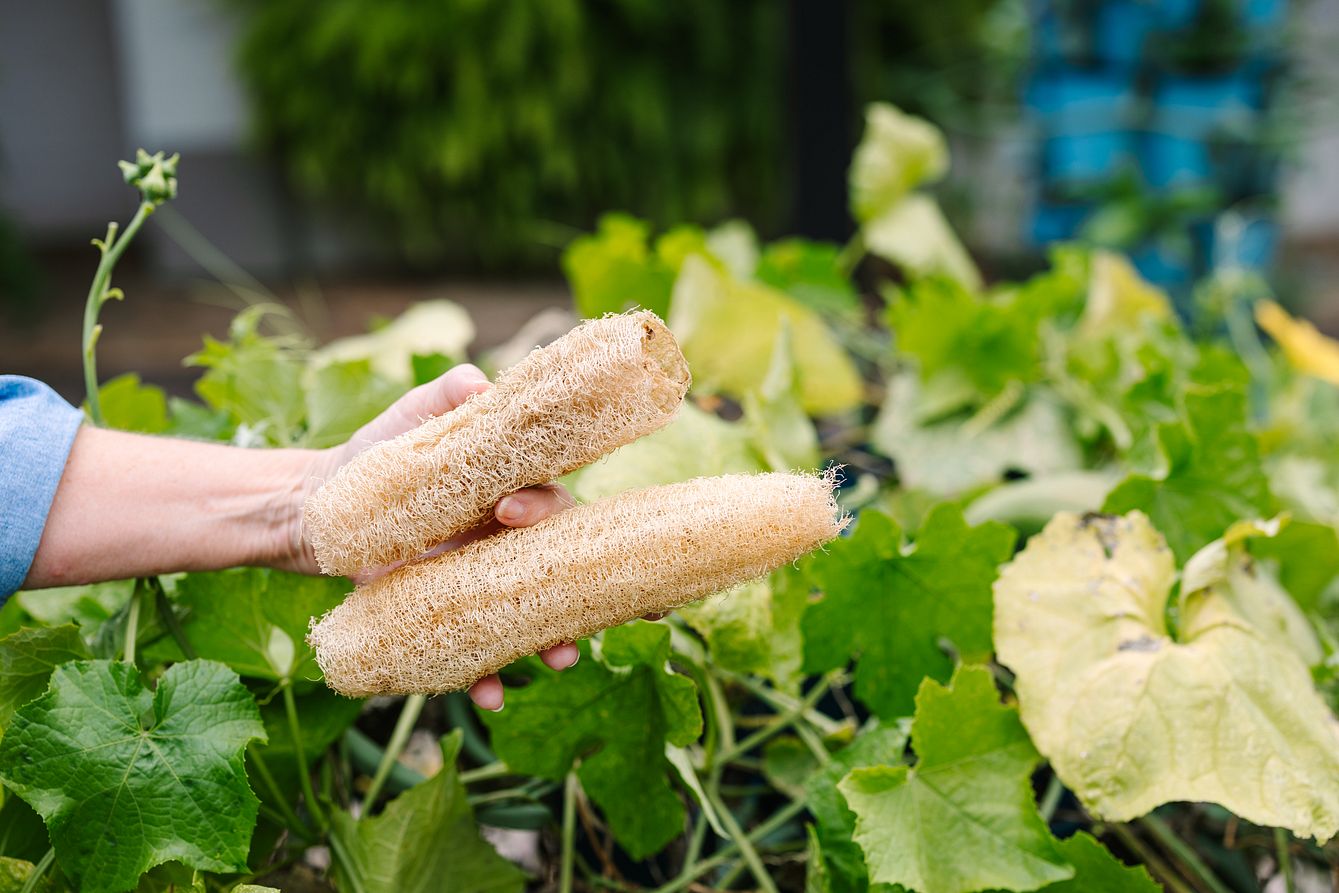
Luffa belongs to the cucumber family, which explains its similar growing habits and flowering patterns. This sponge is different from the ones that come from the ocean — it's the dried fibrous interior of this gourd.
While luffa requires patience with its 120-130 day growing season, watching those massive vines climb your vertical planter and eventually harvesting your own homegrown sponges makes the wait worthwhile.
Planting & Growing
Start your luffa seeds indoors 6-8 weeks before your last expected frost date. These heat-loving plants need warm soil to germinate, so consider a heat mat, even when starting indoors!
Planting Details:
Soil temperature: 70-85°F for germination
Planting depth: ½ to ¾ inch deep
Total plants: 9 plants on a 3-tier provides enough fruit for both eating and sponge-making
Germination time: 7-14 days (sometimes as fast as 4-5 days), with soaking being the preferred method.
Once seedlings develop their first true leaves, they're ready to transplant into your planter after all danger of frost has passed. We recommend one plant per pocket in every other pocket of your 3 Tier GreenStalk Original Vertical Planter.

Choose the Right Varieties
For 10" Original Planter pockets, smooth luffa varieties produce the best sponges with easier-to-extract fibers. Often, seeds will be sold just as “Luffa,” but these varieties have shown great results:
Smooth Boy - Reliable producer with cylindrical green fruits, excellent for first-time luffa growers
Smooth Beauty - Consistent yields of uniform gourds, ideal sponge texture when fully matured
- South Winner - Hardy variety that tolerates variable weather, produces quality sponges and edible young fruits
Managing the Vines
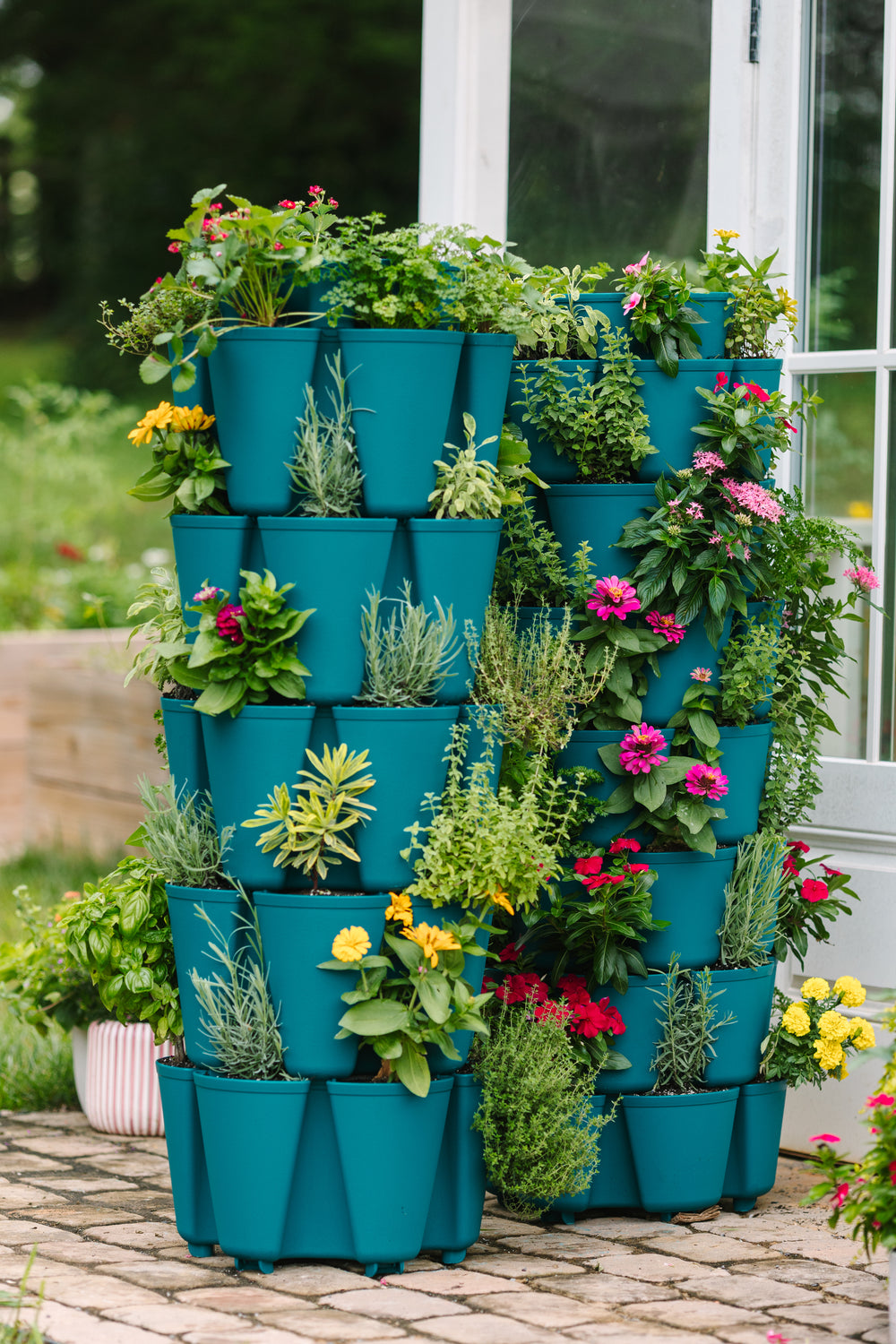
Luffa vines grow aggressively, reaching 20-30 feet in length over the season. Install Plant Supports on every tier of your GreenStalk before the vines take off.
Vine Training Tips:
Guide vines upward through the tiers as they grow
Train them to climb rather than sprawl
Vines will eventually cascade and intertwine through planter levels
Creates a lush green tower with proper support
Your standard potting mix with amendments provides a solid foundation for luffa. These heavy feeders will benefit from regular nutrition to fuel their vigorous growth. Consider applying a balanced organic fertilizer every 2-3 weeks to encourage vine development.

Watering & Fertilizing
Container luffa plants are heavy drinkers and eaters — they need consistent moisture and regular feeding to support their vigorous vine growth. The controlled environment of your GreenStalk makes managing both easier.
Watering Schedule:
Daily during hot weather, every 2-3 days in cooler periods
Deep watering to reach the entire root system
Soil should be moist when you stick your finger down 2-3 inches
Don't let luffa dry out completely—wilted vines slow production
Fertilizing for Vigorous Growth:
Luffa vines consume nutrients quickly as they race up your planter.
At planting: Mix your standard potting soil with amendments
Growing season: Balanced organic fertilizer every 2-3 weeks
Focus: A balanced fertilizer with the that’s rich in phosphorus
Lead gardener Susie Pipkins started with Grow Big, and once they were healthy, strong green plants, switched to Tiger Bloom. GreenStalk's reservoir system helps maintain the consistent moisture luffa craves, but check daily during peak summer heat.

The Dual Harvest Decision
Harvesting for Eating
Young luffa fruits, harvested between 6-10 inches while still dark green and firm, are mild-tasting and tender, similar to zucchini.
Preparation & Cooking:
Some gardeners peel the ridged skin, others leave it on
Dice and sauté with salt and olive oil for a simple side dish
Flavor is pleasantly mild — not strong, but fresh and slightly sweet
Use in stir-fries, soups, or anywhere you'd use summer squash
Harvesting early fruits encourages continued production

Harvesting for Sponges
For sponges, patience is essential. Let the gourds mature completely on the vine for 120-130 days minimum.
Signs of Readiness:
Skin turns from green to brown or yellow
Outer shell becomes dry and papery
Gourds feel lightweight
You can hear seeds rattling inside when you shake them
If frost threatens before they're fully brown, harvest all remaining gourds and let them finish drying indoors in a warm location.
Processing Your Sponges
Once dried, the outer skin peels away easily to reveal the fibrous sponge structure underneath. You can harvest them prior to drying out, when they are fully mature and still light yellow or greenish in color. The sponge will just be slightly lighter and softer.
Processing Steps:
Break off one end of the dried gourd
Pour out the seeds and save them for next year using our seed saving guide
Rinse the sponge thoroughly with water
Optional: Soak in mild bleach solution for brighter appearance
Cut larger sponges into smaller pieces to share

Growing Your Own
The combination of edible young fruits and useful mature sponges taught us a lot with this gardening experiment. We can say from experience how satisfying it is using a bath sponge you grew yourself!
Check out our luffa growing experience on YouTube to see the full process from planting to harvest.
With the GreenStalk's vertical structure managing those sprawling vines, you can grow this traditionally space-intensive crop in a compact footprint. Let us know if you decide to give luffa a try!