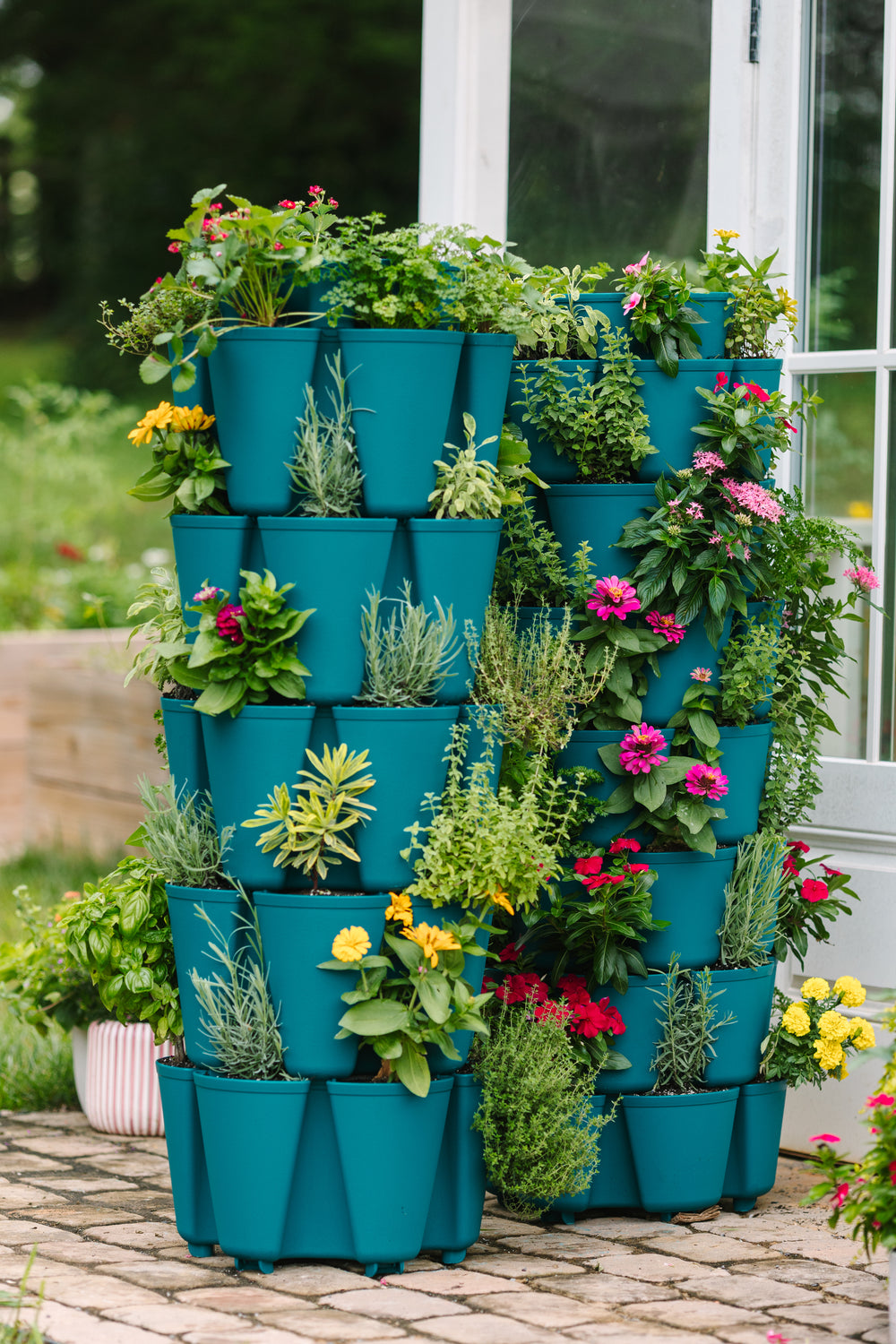



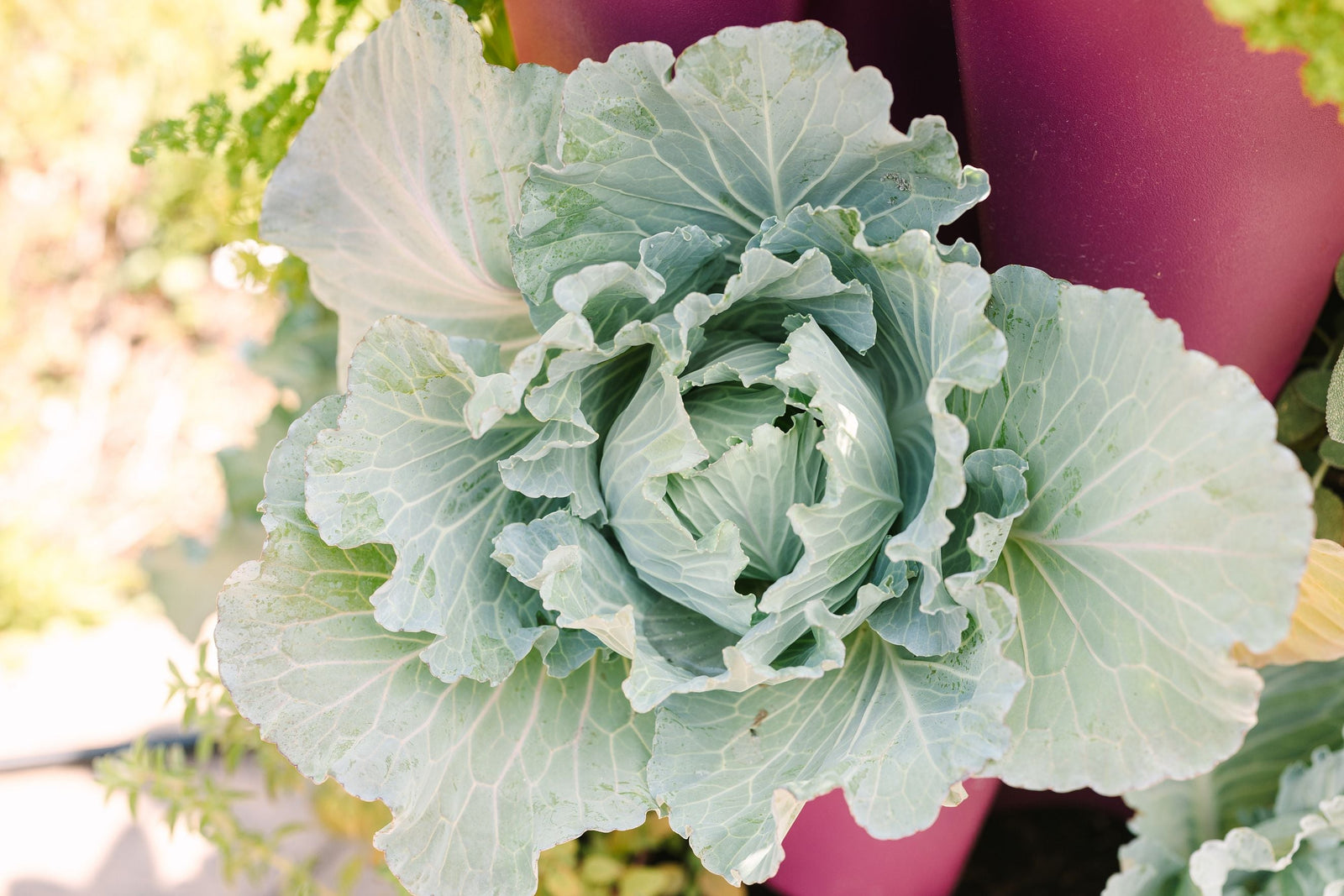

Cabbage doesn't have a reputation as a "small space" vegetable. Picture a classic cabbage patch and you probably see wide rows, three feet of elbow room per plant, and heads the size of bowling balls. So can it actually work in a vertical planter? Turns out, yes! With the right variety, cabbage is a surprisingly good fit for the GreenStalk. Its root system is smaller than its sprawling reputation suggests, and compact, pointed varieties in particular have thrived for GreenStalk vertical gardeners already.
Whether you're after crunchy slaw, a pot of kraut, or just a fresh head to roast, here's everything you need to know to grow cabbage successfully in your GreenStalk.

Cabbage Fast Facts
Plant type: Cool-season biennial, grown as an annual; part of the Brassica family (related to broccoli, kale, and cauliflower)
Sun: 6–8 hours of full sun; tolerates partial shade, especially as temperatures rise
Water: Deep, consistent moisture — about 1 to 1.5 inches per week
Days to maturity: 60-100 days, depending on variety
Spacing: One cabbage per pocket
Best planter fit: Original
Soil pH: 6.0–6.8
Difficulty: Beginner-friendly, but a heavy feeder that appreciates a little pest protection
Planting Cabbage in Your GreenStalk
Cabbage is a cool-season crop, which means it wants to grow in mild temperatures rather than summer heat, in either early spring or late summer into fall. Start with transplants rather than direct-sown seed if you can; you'll get a head start on the season and a much more predictable harvest. (Pun intended)
When you're ready to plant, plant one seedling into each pocket, burying the stem up to its lowest leaves for extra stability. Because cabbage plants get wide even when the head itself stays compact, give them a little breathing room from their neighbors in nearby tiers — somewhere with good airflow and light on all sides.


Best Cabbage Varieties for a GreenStalk
Not all cabbage is created equal when it comes to vertical growing. These varieties are bred to stay compact, making them a natural match for pocket planting:
Caraflex — Our pick for the GreenStalk. This pointed mini cabbage tops out around 9 inches tall and 4.5 inches wide, with heads maturing to just 1.5–2 pounds in as little as 45 days. Its tight, wrapper-style leaves also help shield the tender interior from pests.
Gonzales — A hybrid bred specifically with container and high-density growing in mind, making it a reliable second option.
Golden Acre — A classic heirloom with round, dense heads (3–5 pounds) on a plant that stays compact relative to its head size. Matures in about 60–65 days.
Red Express — A fast-maturing red cabbage (about 63 days), with the bonus that red and purple varieties tend to be less attractive to cabbage worms.
Watering & Fertilizing
One of the biggest advantages of growing cabbage in a GreenStalk is water consistency. Split heads — one of the most common cabbage complaints — are almost always caused by irregular watering, like a dry spell followed by a heavy soak. The GreenStalk's internal watering system saturates every tier evenly, which takes the guesswork out of keeping your cabbage hydrated.
Cabbage is also a heavy feeder, so plan to feed it in two stages:
At planting: Mix Fox Farm Jump Start 3-4-3 into your potting mix to give your transplants a strong, nutrient-rich start.
During vegetative growth: Feed with Fox Farm Grow Big 6-4-4 every couple of weeks, adding it right to your top water reservoir.
Once heads begin to form, ease off the nitrogen. At that stage, cabbage needs less "grow bigger leaves" energy and more support for tightening up the head. Too much nitrogen this late can actually cause loose or split heads instead of the firm ones you're after.

Protecting Cabbage from Pests
The biggest risks to a thriving (vertical) cabbage patch are the cabbage worm (the caterpillar stage of the white cabbage moth) and its cousin, the cabbage looper. These little green eaters can strip leaves fast, and they're much easier to prevent than to undo.
The best defense is keeping the moths from ever landing on your plants in the first place. Our Insect Protection Cover drapes right over your tiers, letting in sunlight, air, and water while physically blocking pests from reaching your leaves — no spraying required. One GreenStalk gardener specifically credited the cover with keeping cabbage loopers off her plants, which is about as good a review as it gets for a brassica grower.
A few backup tools worth keeping on hand:
Handpick any worms you spot — check the undersides of leaves, where they like to hide.
Bt (Bacillus thuringiensis) is an organic spray that targets caterpillars specifically, without harming pollinators.
Neem oil helps manage aphids, which can also show up on cabbage.
Planting dill, sage, or rosemary into a nearby tier can help make your GreenStalk a little less inviting to cabbage moths in the first place.

Harvesting & Storing Cabbage
Cabbage is ready to harvest when the head feels firm and solid all the way through when you give it a gentle squeeze. Cut it at the base with a sharp knife, ideally in the morning when the head is at its coolest and crispest.
Don't wait too long once it's ready. Overripe heads are more prone to splitting, especially after a good rain or watering. Once harvested, cabbage keeps well in the crisper drawer of your fridge for several weeks. And here's a nice bonus: after you cut the main head, some varieties will send up smaller secondary heads from the remaining stem, giving you a second, smaller harvest for free.
You're Ready to Grow!
From crisp slaw to a simmering pot of kraut, a homegrown head of cabbage goes a long way in the kitchen. Let us know how you’re growing cabbage and other brassicas in our GreenStalk Gardeners Facebook Group. Happy growing!