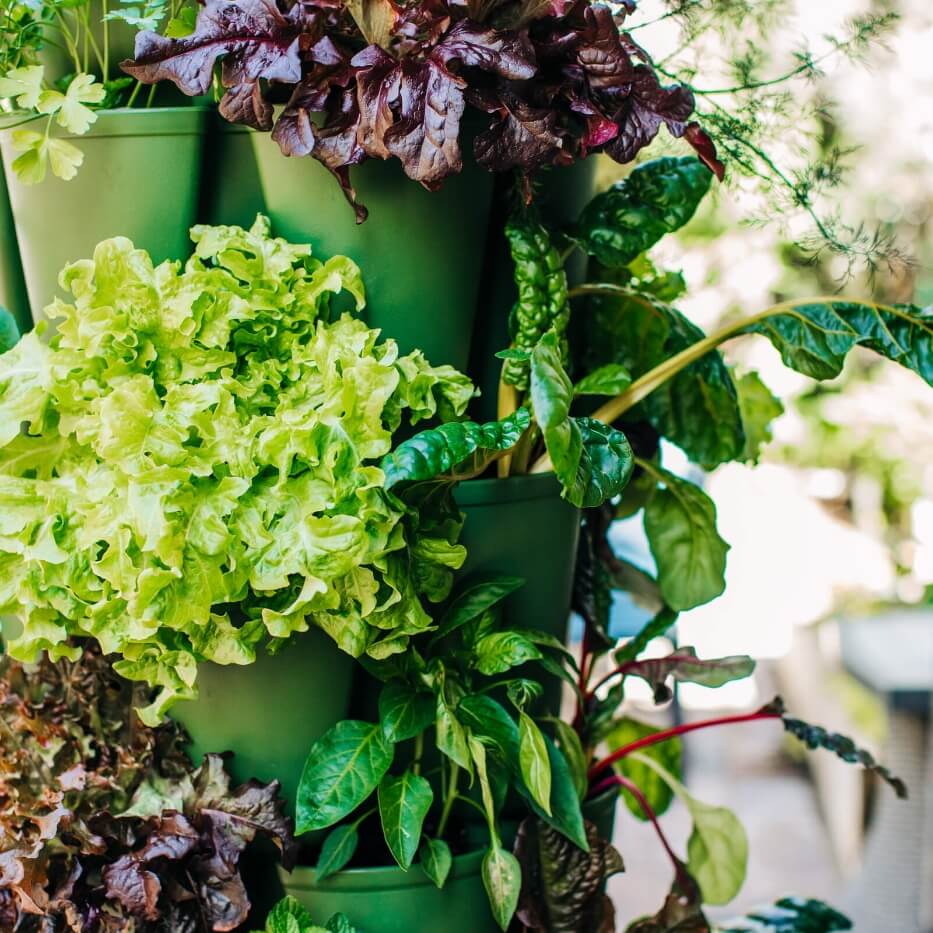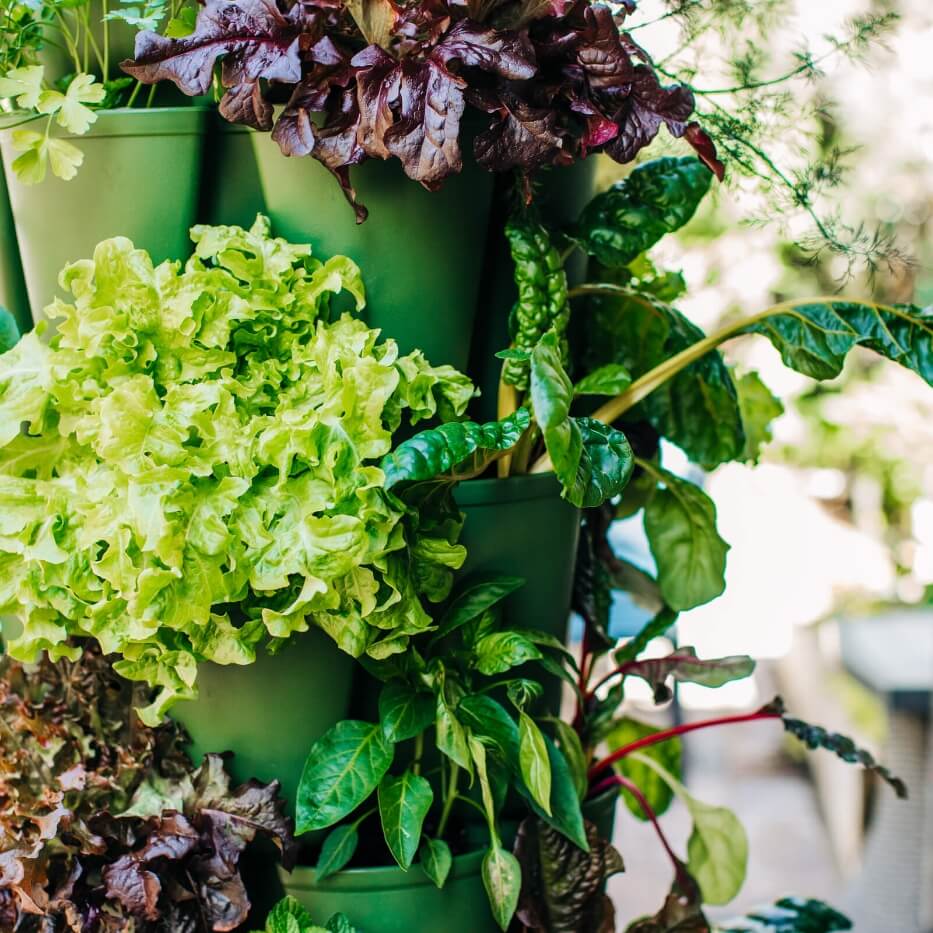



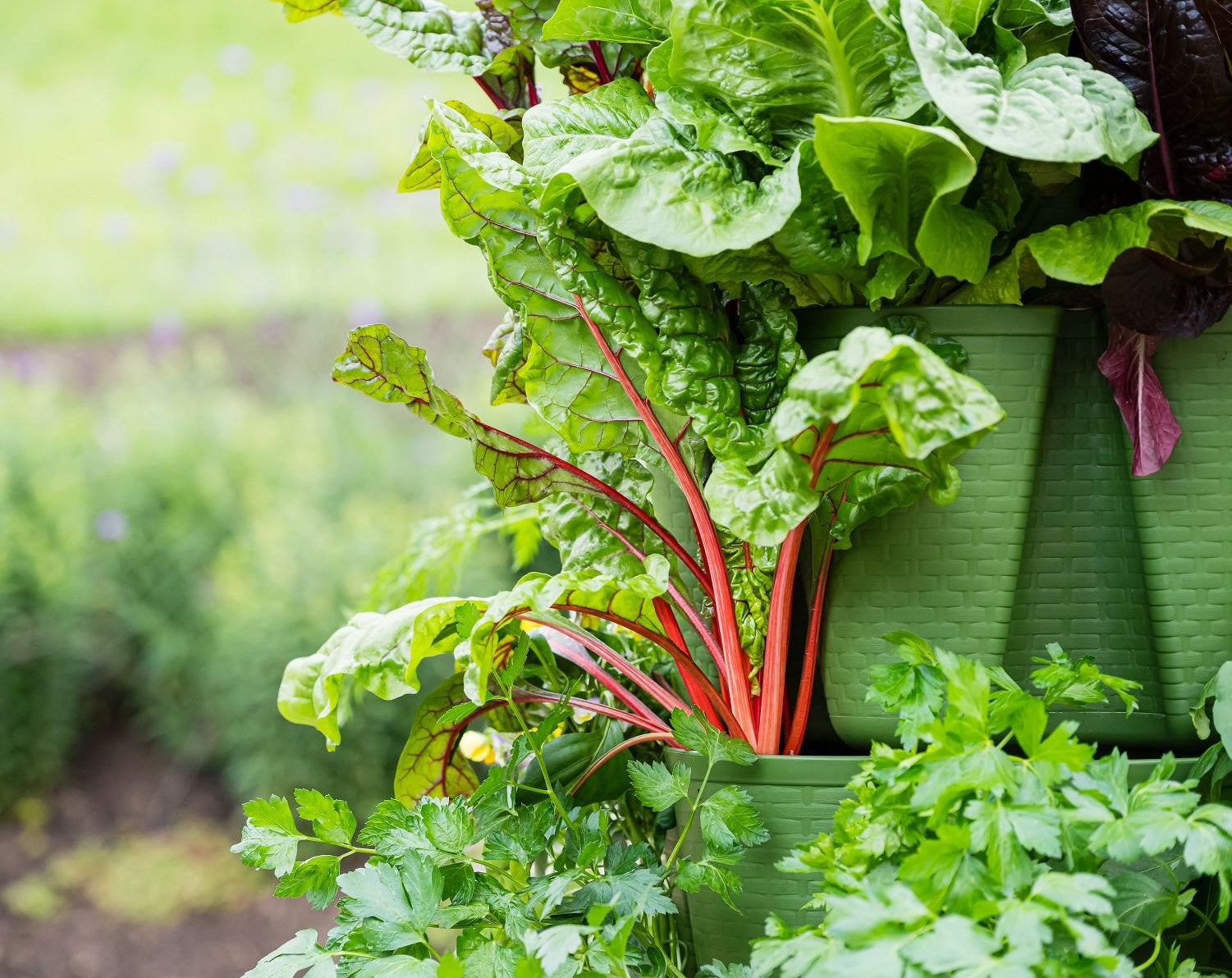

Have you ever grown Swiss chard before? It's nutritious, low-maintenance, and strikingly beautiful. Those glossy leaves and jewel-toned stems make it one of the best-looking crops in any GreenStalk planter. It also happens to be one of the most forgiving plants you can grow, tolerating heat, cool snaps, and a little neglect without missing a beat. If you've been curious about adding chard to your lineup, this is your sign.
Swiss Chard Fast Facts
Cool or warm weather: Both (cool preferred)
Size: Medium-large
Sun: Full sun; tolerates partial shade
Days to maturity: 45–60 days (baby leaves ready in as few as 30)
Water: Consistent
Original or Leaf GreenStalk: Both
GreenStalk level: Upper and middle tiers
Plant support needed? No

Planting & Growing
Swiss chard can be direct-sown or started from transplants, either works well in a GreenStalk. It's a cool-season crop at heart, so the ideal time to plant is in early spring, a few weeks before your last expected frost date, or again in late summer for a fall harvest. That said, chard is unusually adaptable. It can push through light frosts, hang on through summer heat, and keep producing long past when other greens have given up.
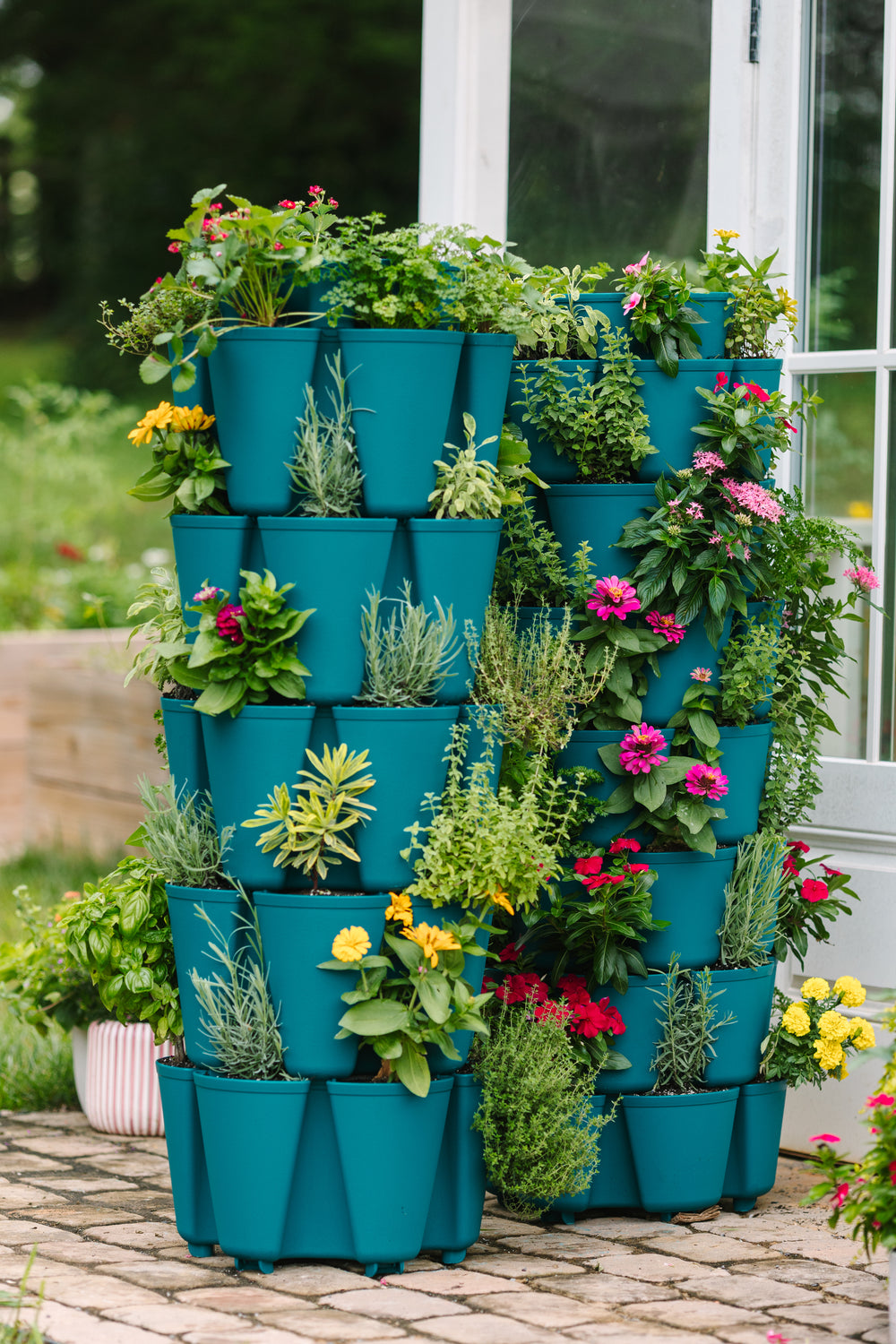
Plant one per pocket in the middle to lower tiers of your Original or Leaf planter, where it has room to reach its full height of 18–24 inches. Use a quality potting soil/mix mixed with worm castings when first setting up your GreenStalk, as traditional garden soil won't drain properly in a vertical planter.
Best Swiss Chard Varieties for Your GreenStalk
To grow Swiss chard is to grow your own rainbow. Here are a few of the many varieties worth trying:
Five Color Silverbeet (available in GreenStalk seed packets) — A rainbow mix with stems in red, yellow, orange, pink, and white. Striking in the planter and in the bowl. A great all-around pick.
Bright Lights — The most widely available multicolor variety. Similar to Five Color Silverbeet in appearance, with reliably strong production and good flavor at every stage from baby leaf to full size.
Fordhook Giant — A classic white-stemmed variety with large, deep green leaves. Not as flashy as the colored types, but one of the most productive chard varieties you can grow.
Ruby Red (Rhubarb Chard) — Deep crimson stems with rich, slightly earthier flavor. A bold choice that looks stunning in the planter and holds up well to cooking.


Watering & Fertilizing
Chard likes consistent moisture but doesn't want to sit in soggy soil. Water when the top inch or two of soil feels dry, and let the GreenStalk's reservoir system do the heavy lifting. As with most leafy greens, too much heat and too little water are the fastest routes to disappointment. Keep the soil evenly moist and you'll be rewarded!
As a light feeder, chard will benefit from your feeding to the hungriest plant in your GreenStalk. Follow the instructions on the bottle of liquid feeder — we recommend Fox Farm Grow Big — to keep your chard leafy and strong all season long.

Harvest & Storage
Swiss chard is a cut-and-come-again crop, which is one of the best things about it. Start harvesting outer leaves once the plant reaches about 6–8 inches tall, cutting cleanly at the base of the stem. Leave the inner leaves intact and the plant will keep producing, sometimes for months. The more you harvest, the more it grows.
Young leaves are tender, great eaten fresh. Mature leaves have more structure and a slightly deeper, earthier flavor that holds up beautifully to heat. Fresh chard keeps well in the refrigerator for about a week, loosely wrapped or stored upright in a glass of water.
If your GreenStalk is overflowing with chard and you're looking for a recipe that does it justice, our Swiss Chard Wilted Salad is a GreenStalk staff favorite — a warm bacon dressing, sweet cranberries, and crunchy pecans. Simple enough for a weeknight, special enough to share.