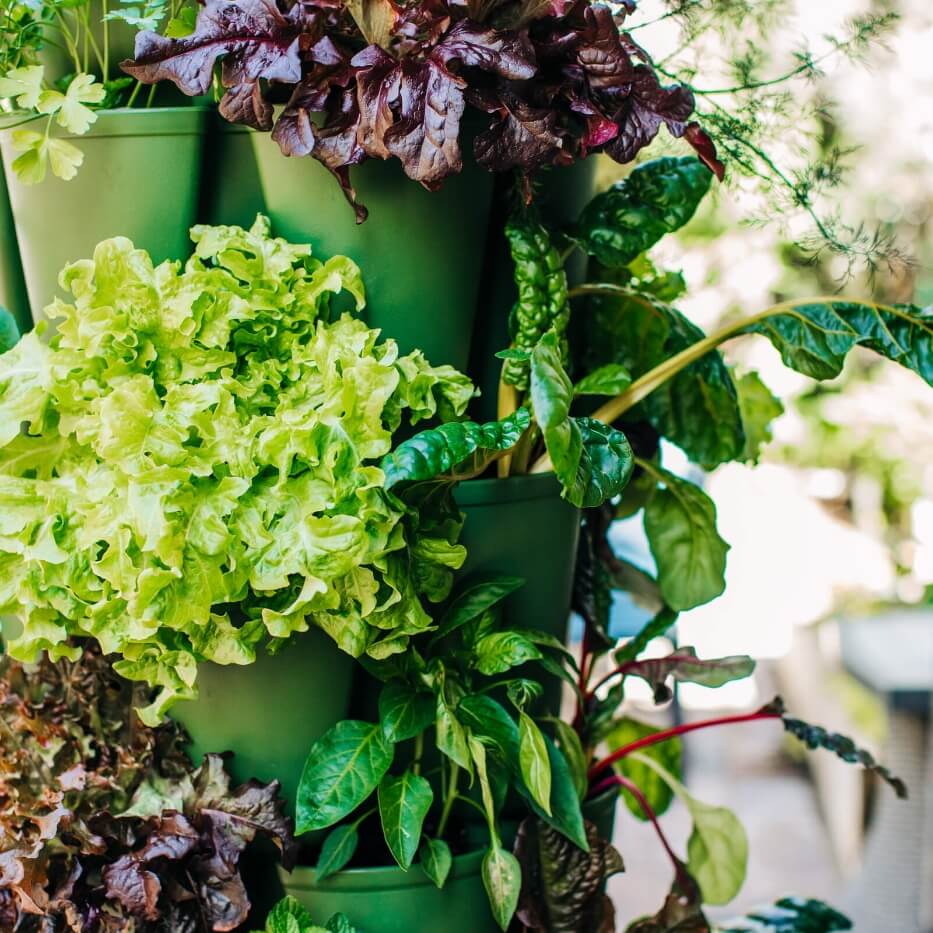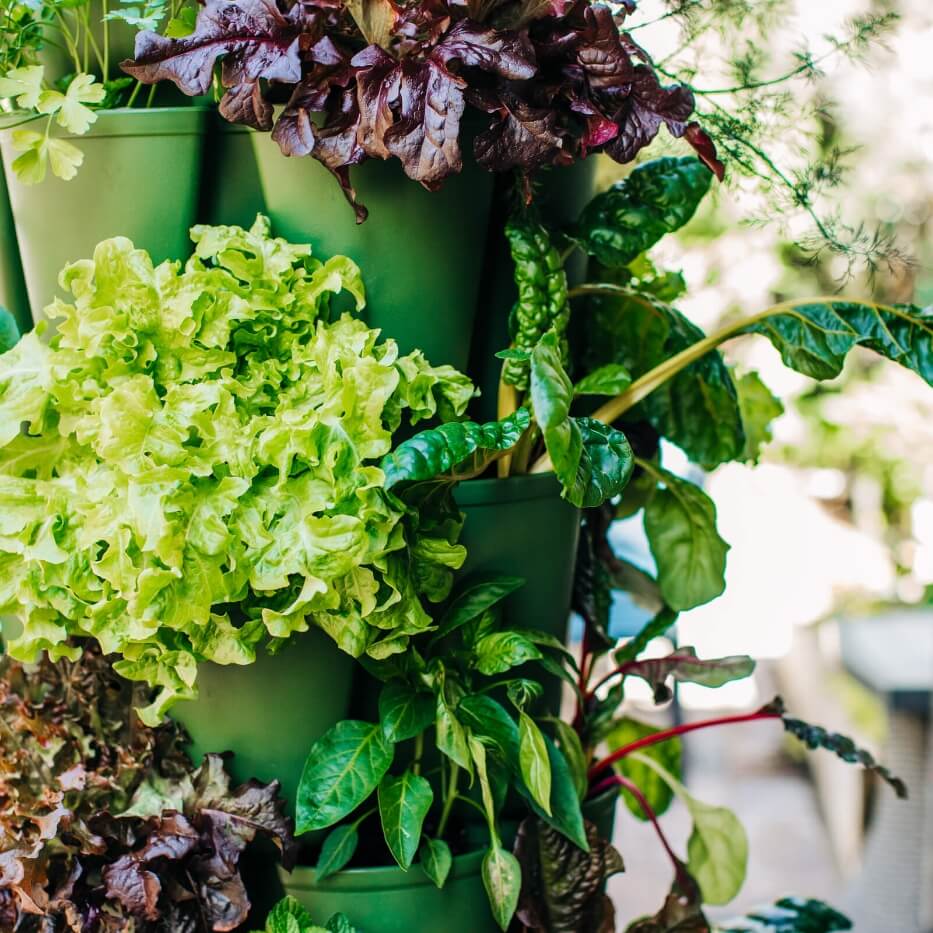




Herbs grow in abundance, but recipes call for just a handful at a time! If you’re not accustomed to always having herbs on hand, allow us to introduce you to new ways to preserve and experience one of your garden’s easiest crops.
These techniques create ready-to-use preparations: homemade spices, herb oil cubes for quick cooking, compound butters that enhance toast & tapas alike, and tea blends with medicinal potential.

Harvest for Best Flavor
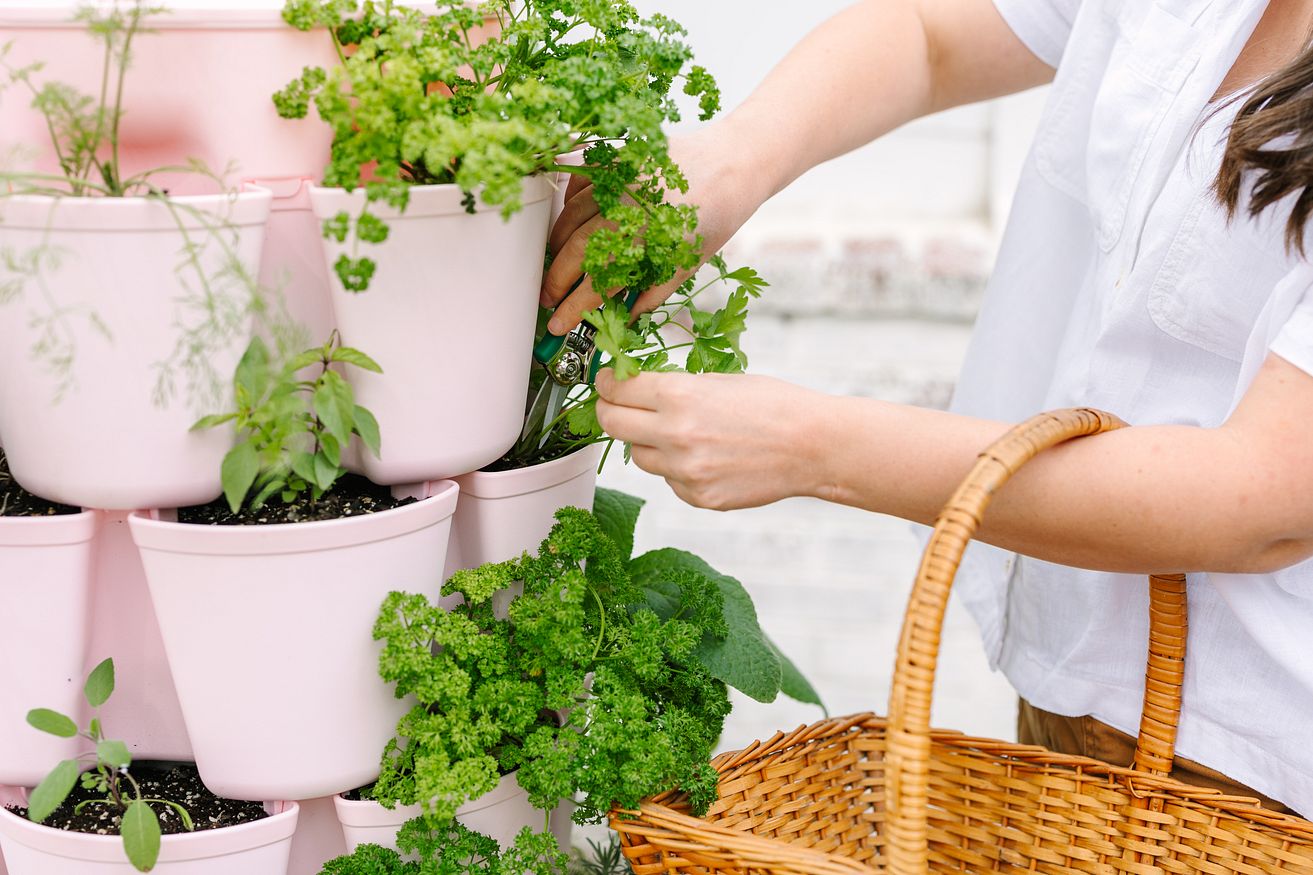
Timing your trimmings can help you make the most of your herbs’ flavor. Pick herbs mid-morning after the dew dries, before the day gets hot.
Use sharp scissors and avoid taking more than one-third of any plant at once. Start by trimming the center-growing stem every few levels of leaves to encourage bushiness and prevent premature bolting. Leave the lower leaves, which are older and less flavorful, to do the work of photosynthesizing.Then, grab a few outer leaves from midway up the plant to round-out your harvest.
Toward the end of the season, don’t wait until your herbs flower! Harvest the full plant and do a big batch of preservation while the leaves are still fresh and flavorful.
Herbs we love:
Oregano and thyme (excellent for all methods)
Rosemary (especially good for air drying)
Basil (handle gently, great for oil cubes and air drying)
Parsley and cilantro (best preserved with air drying)
Drying Methods + Storage Considerations
Air Drying
Bundle 5-7 stems together with rubber bands or string. Use a paperclip as a hook - bend one end under the rubber band, hang from the other end. Space bundles 5-6 inches apart in a warm, dry room away from sunlight.
Most herbs dry in 1-2 weeks. Test by crushing a leaf - it should crumble easily with no moisture. Oregano, thyme, and rosemary work best for air drying.
Oven Drying
Spread herb sprigs on baking sheets in a single layer. Set the oven to 200°F and use the center rack. Most herbs finish in 15 minutes.
Watch closely at the end - dried herbs should crumble but not turn brown.
Storage
Put dried herbs in airtight glass jars, either as individual spices or blended to replace store bought staples. Don’t forget to label and date! Well-dried herbs last 6 months to one year, at least.

Freezing for Easy Cooking
Herb Oil Cubes
Fill ice cube trays two-thirds full with chopped fresh herbs. Use basil, parsley, cilantro, oregano, or thyme. Pour olive oil over herbs until covered. Press down gently.
Freeze for at least 3-4 hours, then move to labeled freezer bags. These keep for at least 6 months. Drop a cube right into your hot pan when you’re ready to cook.
Plain Freezing
Sturdy herbs like rosemary and thyme freeze well on stems. Wrap small bundles in foil and freeze for up to 6 months. They get limp when thawed but taste great in cooked dishes.

Compound Butters & Quick Oils
Compound Butter
Mix 2 tablespoons of chopped fresh herbs into each stick of soft, unsalted butter. Try garlic-chive-dill for vegetables, or rosemary-sage for meat. Add a pinch of salt.
Shape into a log using parchment paper. Twist ends closed and refrigerate for 2 hours until firm. Keep 2 weeks in the fridge or 4-6 months frozen. Slice off pieces as needed.

Quick Oil Infusions
Mix fresh herbs with olive oil (or another flavorful favorite) at room temperature. Use within 2-4 days when kept in the refrigerator. Great for drizzling or bread dipping.
Herbal Teas
Combine individual herbs or make your own blends stored in an airtight container. Use 1-2 teaspoons of dried herbs per cup of boiling water. Cover and steep for 5-15 minutes. Unlike green or black teas, herbal teas don't typically get bitter from long steeping and make great concentrates for iced teas and syrups.
Easy blends to try:
Dried mint and chamomile for bedtime tea
Oregano and thyme for a savory, warming blend
Lemon verbena mixed with any other herbs for brightness
Store homemade tea blends in airtight containers for up to one year.

Pick one or two methods that fit your cooking style and start there! If you cook vegetables often, try herb oil cubes first. Love rich flavors in creamy spreads? Try compound butter. Want to drink more herbal tea? Adventure into drying and blending.
Success comes from proper storage and realistic portions. You don't need huge amounts of herbs to make a big impact on flavor. Of course, if you grow more than you could ever need, an ice cube tray of herb cubes, and butter logs make great gifts for your favorite foodies.
Small batches let you try different combinations and find your favorites. With these techniques, fresh herb flavors become part of your everyday cooking, no matter the season.