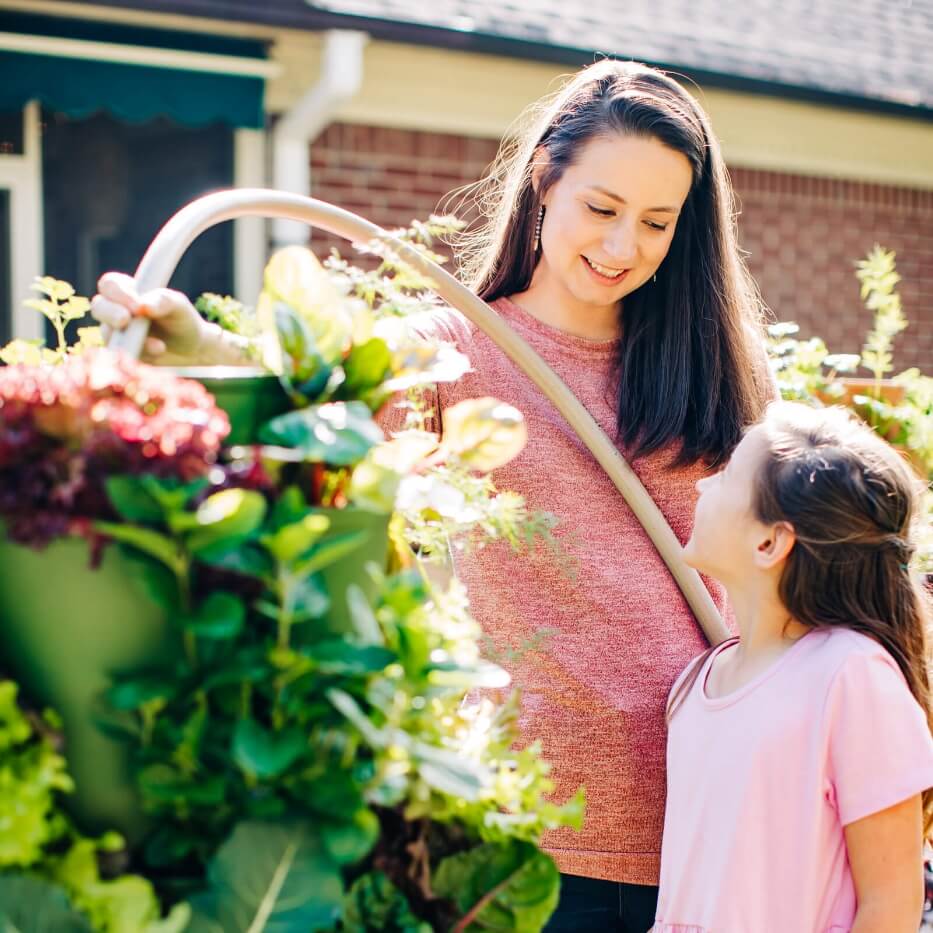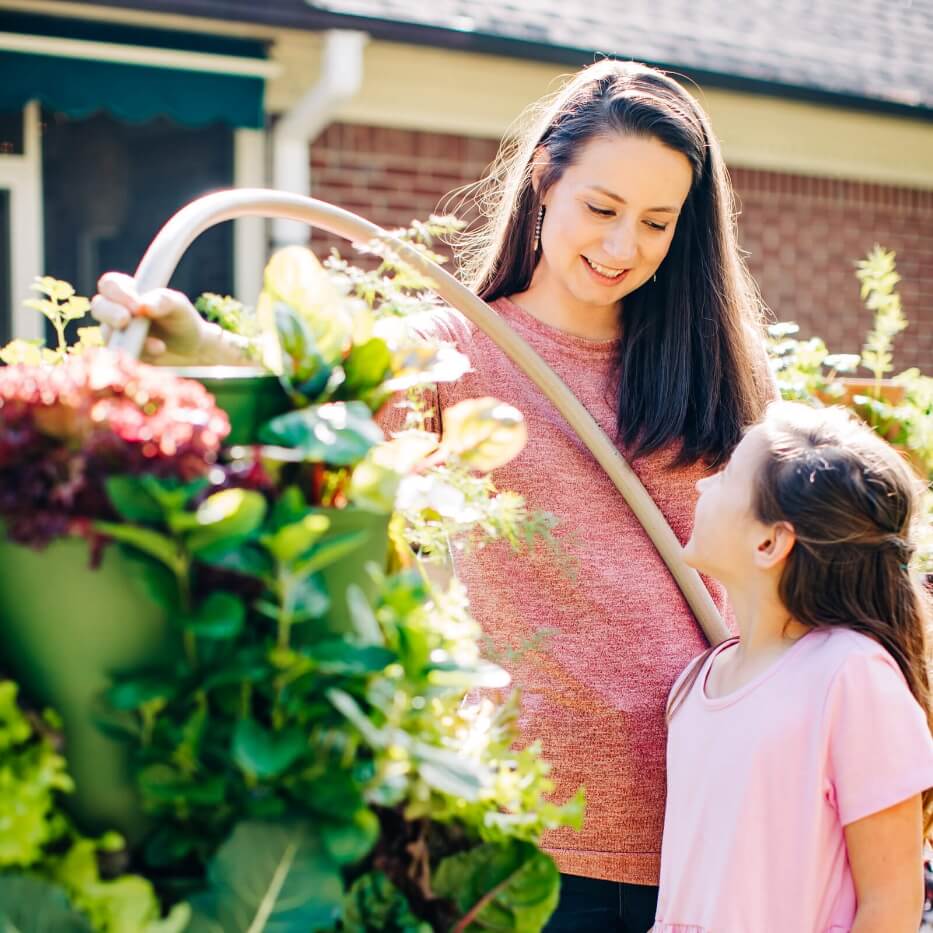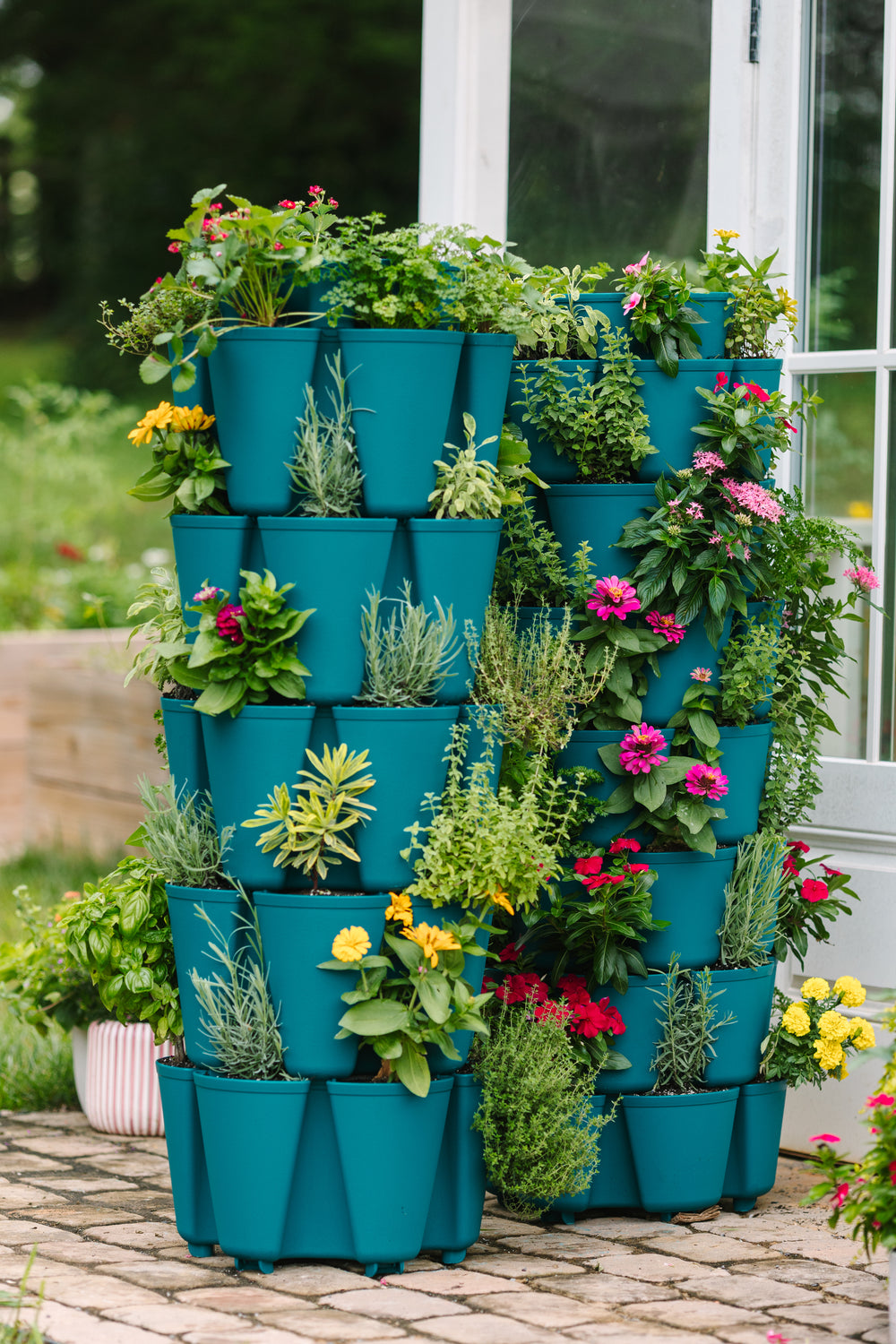



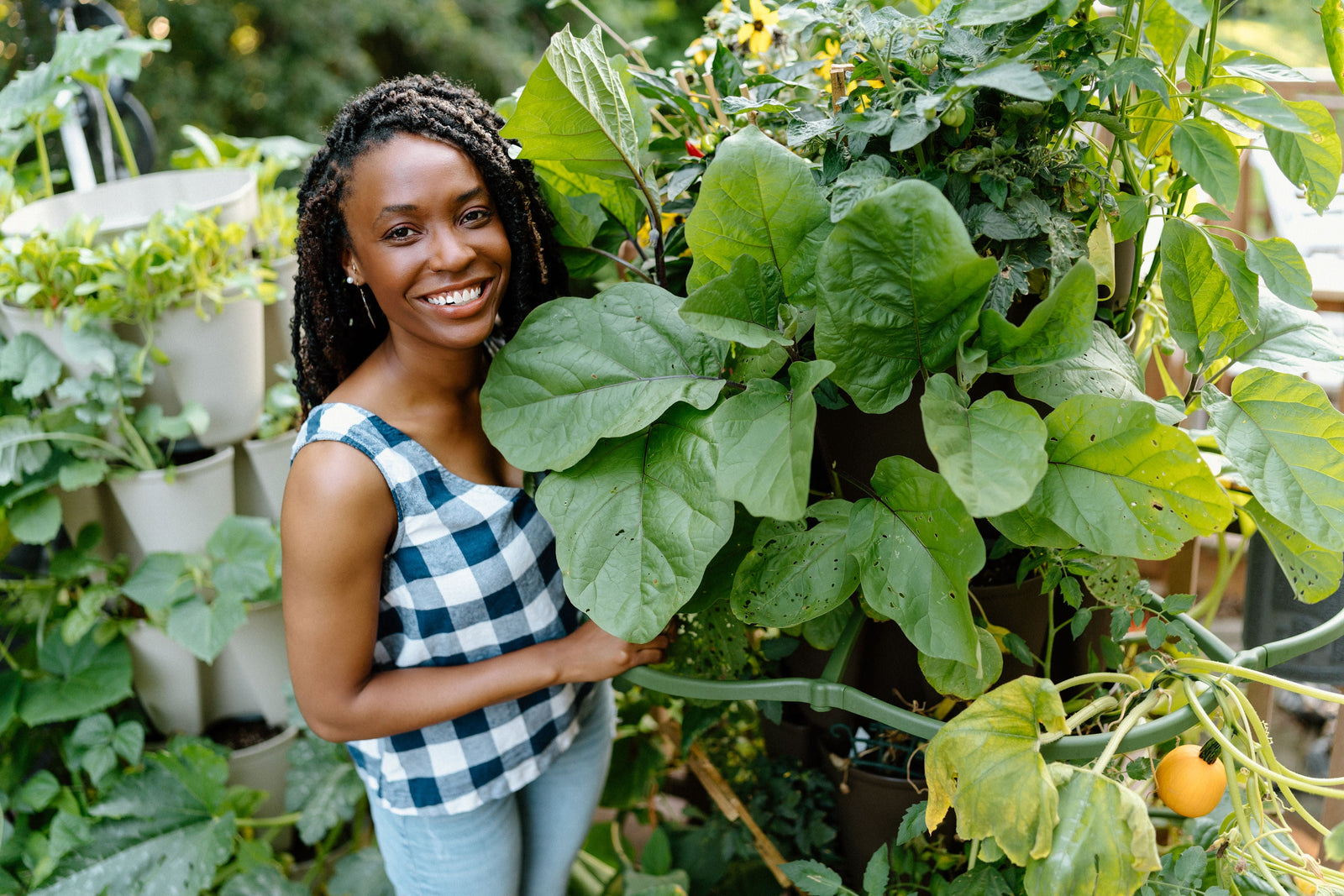

Cassandra's lush oasis full of GreenStalk Vertical Planters is the perfect example of taking homesteading dreams and making them a reality in a small backyard garden.
When Jack Peterson designed the GreenStalk Vertical Planter with his son Ryan, he had no idea how much his invention would inspire a community of gardeners. We believe no matter how small your space is, you can grow your own food.
As a full-time school administrator in Maryland, Cassandra gardens on her townhouse deck and has learned ways to be more self-reliant in the city. She and her husband, Tre, and bulldog Thor are homestead dreamers. Cassandra shares what she’s learned and shows how much you can grow with GreenStalk Planters on her YouTube channel and blog, Becoming a Farm Girl. She was kind enough to share about her small-space gardening journey and answer our questions about the role her GreenStalk Planters play in her lush and abundant deck garden.

Photo credit: Monica Murphy
A Continuing Heritage
Farming is the largest commercial industry in Maryland. Growing up in a small mountain town, Cassandra constantly enjoyed farm stands, orchards, and agricultural events that inevitably wooed her to the garden through vibrant textures and juicy flavors. She recalls that her Pop-Pop’s small garden had the most delicious lima beans. While her parents didn’t maintain a home garden, young Cassandra was encouraged to keep potted plants which she used to grow edible herbs and vegetables.
Over the years, Cassandra has developed her experience as a gardener in a patchwork method of learning from and alongside other gardeners in her neighborhood. She’s also gained knowledge through workshops and homesteading conferences, devouring books, and connecting through online communities. She has since refined her garden focus towards becoming a proficient vertical gardener, growing primarily in GreenStalk planters.

Photo credit: Monica Murphy
Four GreenStalks and Counting
Growing in GreenStalks for almost four years, she uses both the Leaf and Original Planters to grow a range of flowers, fruits, herbs, and vegetables all year round. Being in growing zone 7b in the Mid-Atlantic, her growing season lasts about eight months. She has gradually added more GreenStalks and currently has two Leaf and two Original Planters with plans to get more.
When asked what she likes to grow, she responds, “Everything!” With a GreenStalk, she loves how you’re able to experience the full range of crops from compact hybrids to full-sized varieties.
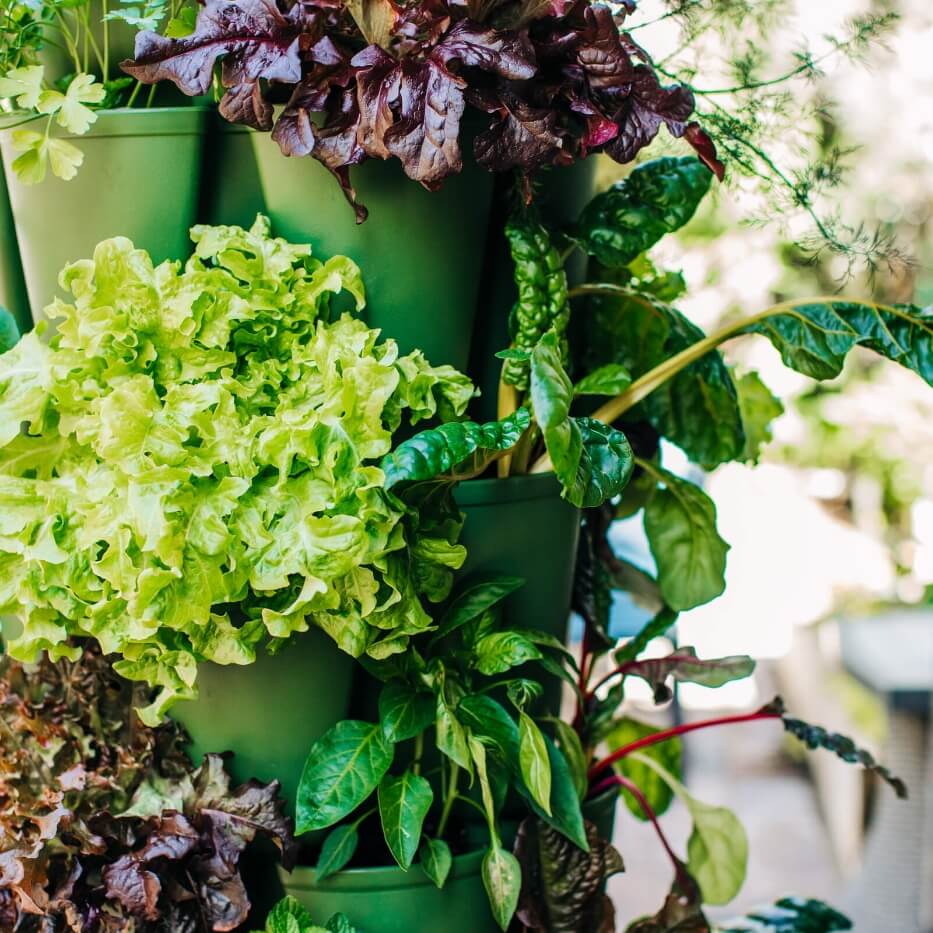
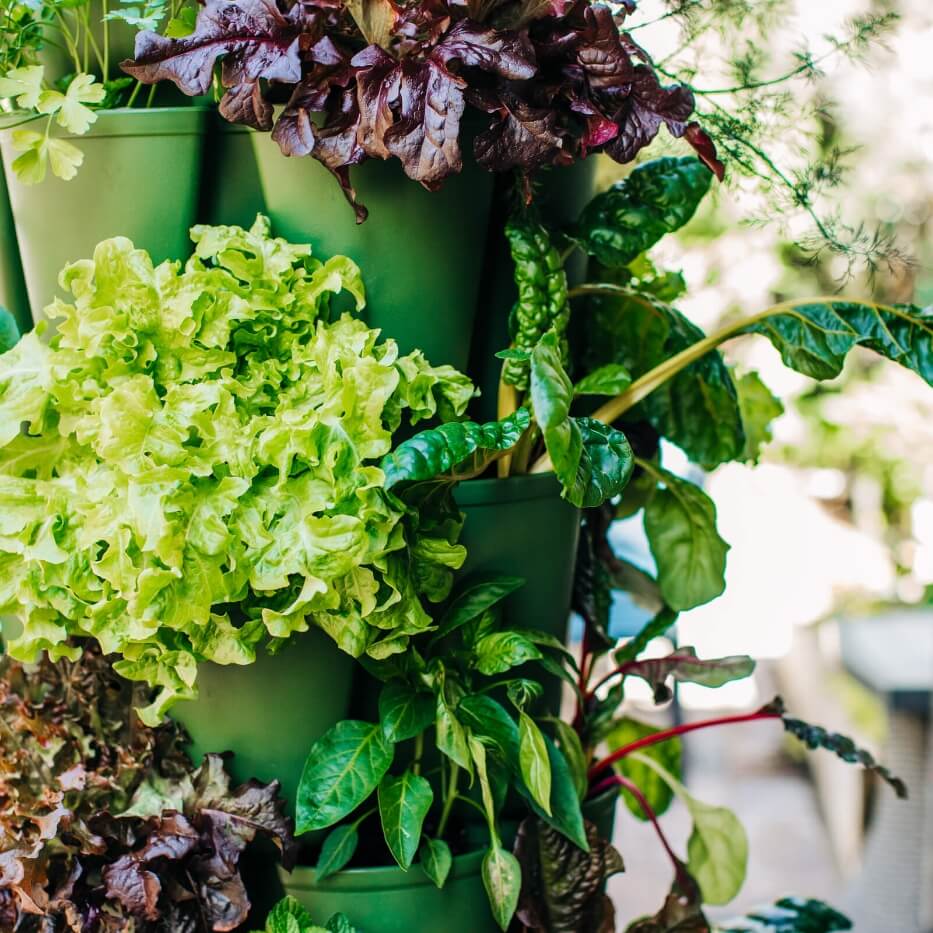
“I especially enjoy growing leafy vegetable varieties known for their rich colors, textures, and superior taste. Once I discovered heat and cold-hardy cultivars that allowed me to enjoy fresh kale, collards, and lettuces depending on the season, I was hooked! The high-density feature of growing in a GreenStalk has allowed me to supplant 100% of my leafy green grocery store purchases just from my deck. Growing vertically means my produce experiences minimal pest pressure or disease compared to in-ground growing which makes harvesting easier. Even better, I’ve completely eliminated packages of salad spoiling in the fridge!”
For her shallow-rooted lettuces and herbs, she uses theGreenStalk Leaf Planters for a continuous harvest for most of the year. For her, there’s no comparison between store-bought and homegrown in terms of how much better the flavor of fresh, home-grown varieties taste.
A Feast for the Eyes
Cassandra’s GreenStalks not only provide food, but they’re also a colorful feast for the eyes.
“Every year, I interplant an eclectic mix of five-color silverbeet Swiss chard with fiery yellow and orange marigolds. They’re planted alongside a highly textured cabbage variety for a knock-out pairing that appeals to the eye and taste buds. Herbs such as bronze fennel, ferny green dill, purple basil, variegated garden sage, fragrant lavender, bright green rosemary, and chives do the same, which is why they're a close second in my garden. The potency of fresh herbs truly adds that pizzazz to basic meals but you’ll pay a premium for a paltry amount at the store. Most herbs are cut and come again which means they are an inexpensive and indispensable part of my meal prep!”
The Problem With Traditional Containers
In the beginning, she tried to combine methods she thought would maximize food production and space. For a number of years, Cassandra had a collection of pots, 5-gallon buckets, and cloth bags along with raised and in-ground beds.
“Most would’ve made the assumption that I had a productive garden — except that couldn’t be further from the truth. As my desire to container garden grew, I ran into problems that cost me money, energy, and time,” she explains.
With containers of so many different sizes and materials, keeping up with the watering and maintenance requirements of each pot added to the work and subtracted the enjoyment of gardening.


Photo credit: Monica Murphy
Cassandra points out, “If you want to expand your garden with pots, your only option is to take away walkway space, which is at a premium in a small space. A cluttered container gar- den isn’t ideal for watering or spending much time in. It’s not a space you can sit comfortably in and enjoy.”
Discovering GreenStalk was the solution to Cassandra’s issues with small space container gardening. “GreenStalk gives you a green thumb whereas other growing methods can easily frustrate newer gardeners and tempt them to give up,” she says. “I was on the brink of quitting too, so I get it.”
"Our well-being, history, health, beauty, nourishment, legacy and future are in the garden. Aside from this, what else is there?"
At GreenStalk, we are so grateful for Cassandra and others in our community who believe that gardening is for everyone. You don’t need sprawling acres to enjoy a bounty of fresh produce, and you might just start growing your happiness as well.
“Nothing beats stepping outside each day and gathering the tastiest parts of dinner a few steps from your kitchen. Starting a kitchen garden is the most practical hobby you can pursue. You’ll learn new skills, become more observant of the outdoors, and return with handfuls of fresh basil, leafy greens, or a basket of tomatoes!”
Her online videos and blog are a wealth of information for beginning gardeners. One piece of advice Cassandra has is to learn through observation, experimentation, and collaborations across seasons of gardening. She says, “Becoming a gardener isn’t about having a green thumb. It’s about learning from your mistakes and understanding the plant’s point of view. Gardening is something you learn to do over time. Here’s to your harvests — big and small — and to making the most of every season. Oh, and call me if you ever run out of kale!”
You can follow Cassandra at her YouTube channel and becomingafarmgirl.com.