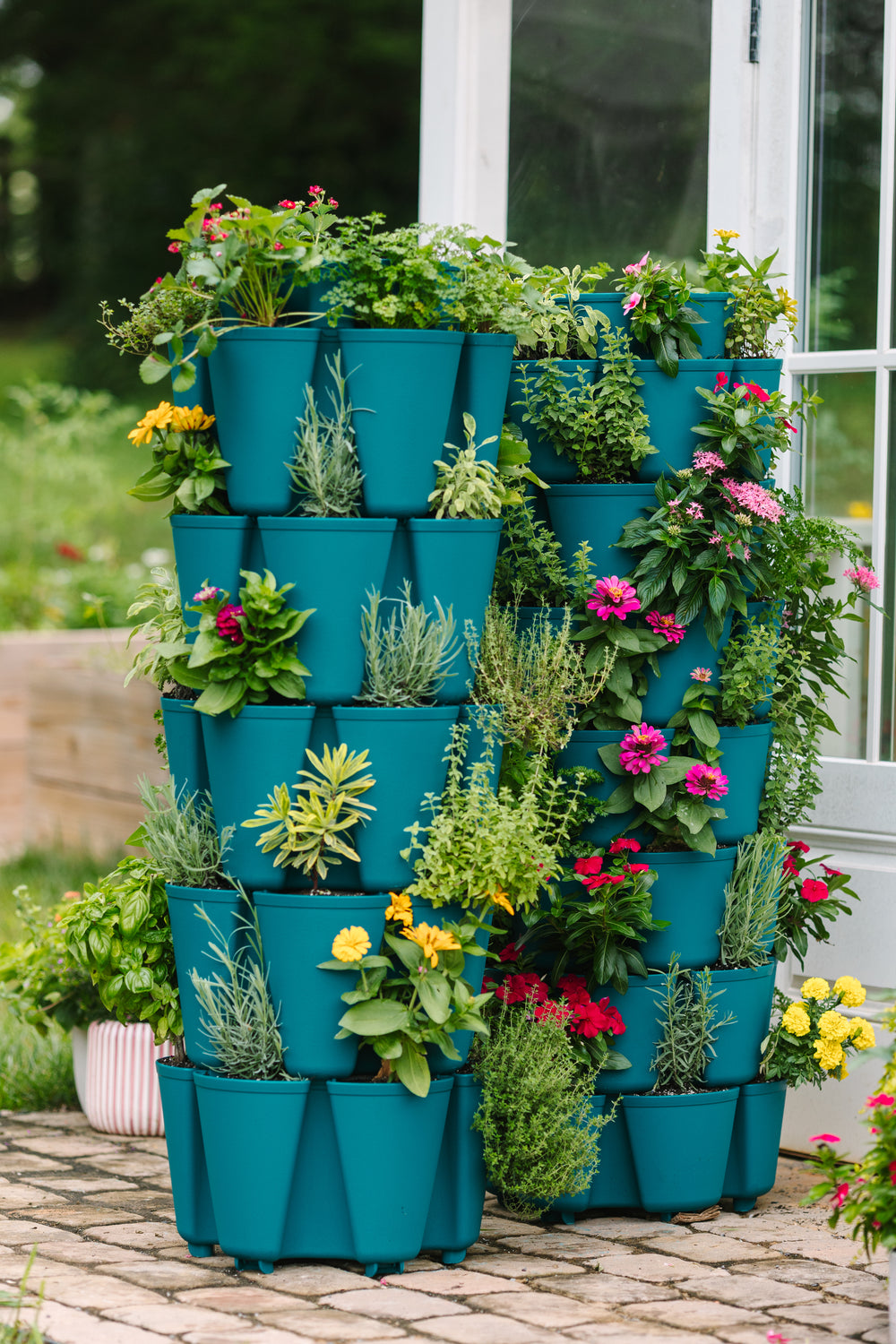




If you've ever picked up a bag or bottle of fertilizer and stared at three numbers separated by dashes — something like 10-10-10 or 5-8-5 — you've met NPK. Those numbers stand for Nitrogen, Phosphorus, and Potassium, the three main nutrients every plant needs to grow. Understanding what each one does is one of the simplest ways to get more out of your GreenStalk Vertical Planter, and how you can maximize your harvest by growing a variety of plants.
What Each Nutrient Actually Does
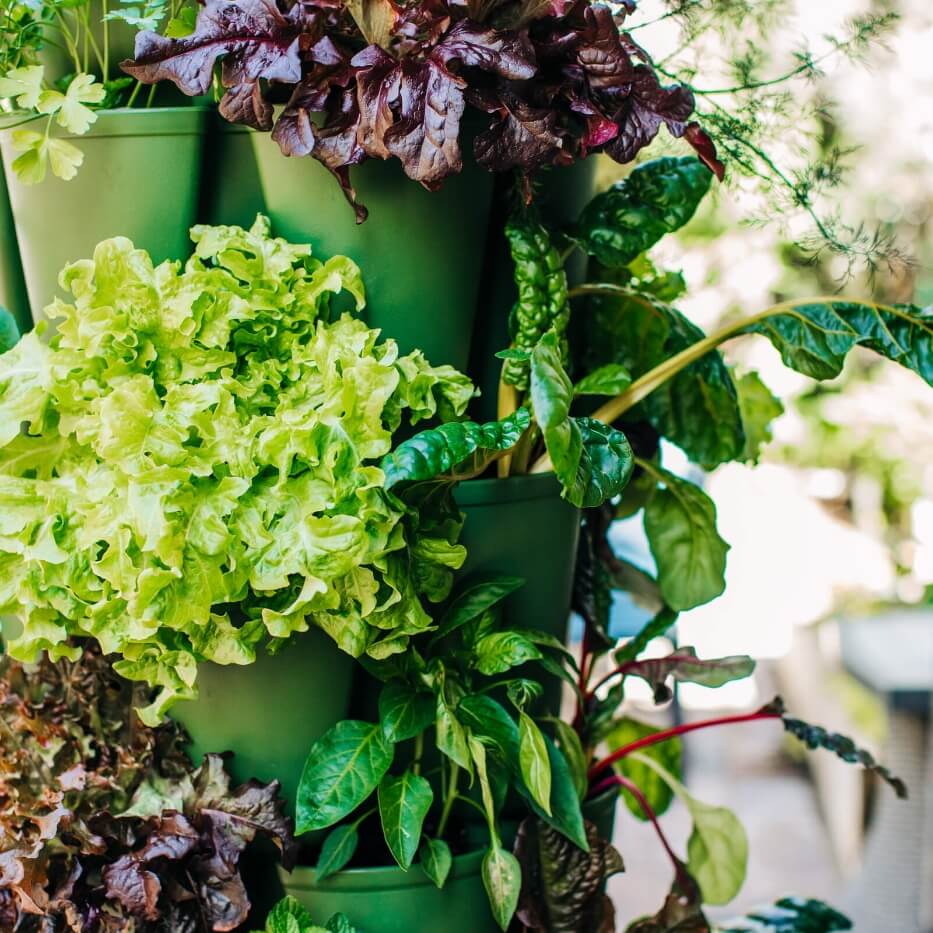
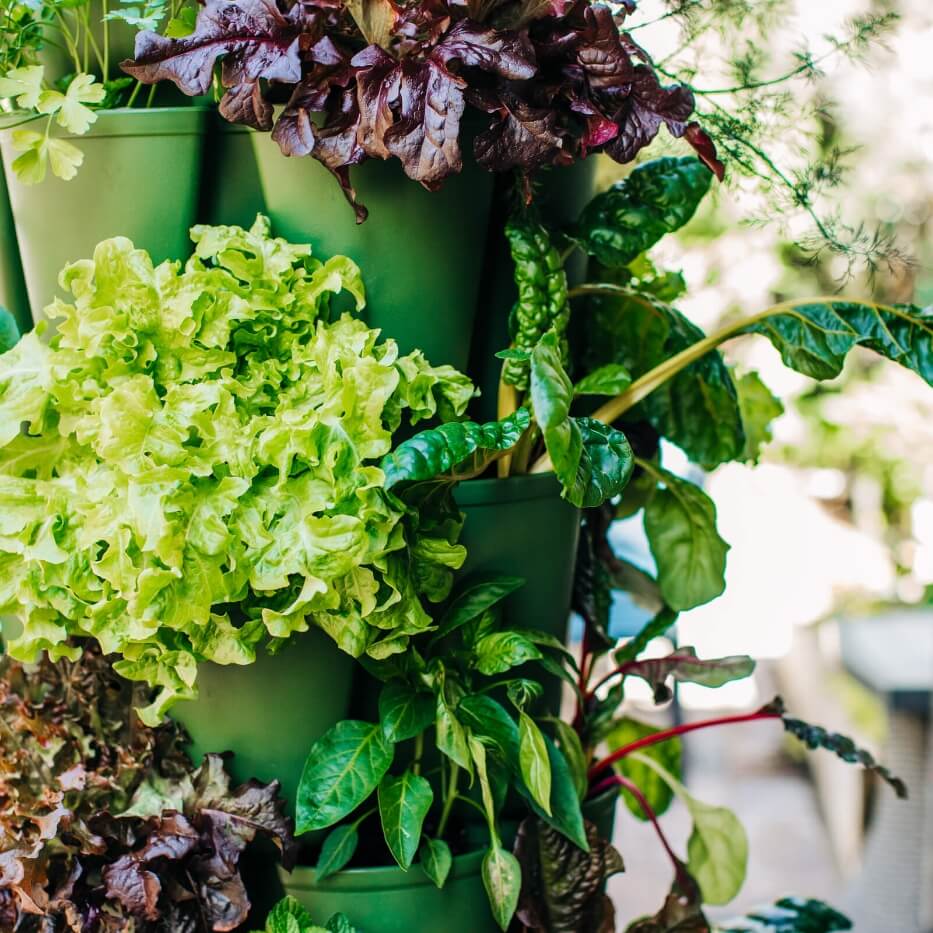
Nitrogen (N) is all about leafy growth. It's the nutrient your greens, herbs, and lettuce are hungry for. Anything you're growing mainly for its leaves benefits from a nitrogen boost.
Phosphorus (P) supports roots, blooms, and fruit. This is the nutrient your tomatoes, peppers, and squash care about most, especially once they start flowering.
Potassium (K), sometimes listed as potash, rounds things out. It supports the plant's overall health and resilience, helping it handle stress, regulate water, and keep everything else functioning well. Every plant benefits from potassium.
A simple way to think about it: nitrogen for what's above the soil, phosphorus for what's below and what blooms, and potassium for the whole plant's wellbeing. Once you know what each letter does, those three numbers on a fertilizer label start to make a lot more sense.


Yellowing leaves can be a sign of nitrogen deficiency (left), while carrots need phosphorus to grow larger roots (right).
What Do the Numbers Actually Mean?
Once you know what N, P, and K each do, the next question is: what do the numbers themselves tell you? Every fertilizer label lists three numbers in that same order — N-P-K — and each one is a percentage, by weight, of that nutrient in the bag or bottle.
So a fertilizer labeled 10-10-10 is 10% nitrogen, 10% phosphorus, and 10% potassium, with the rest made up of filler and other trace nutrients. A bag labeled 5-8-5 has less nitrogen and potassium but more phosphorus in comparison, a ratio you'd expect to see on something marketed for blooming or fruiting plants.
The higher the number, the more concentrated that nutrient is. This is useful for comparing products at a glance: a fertilizer with a bigger middle number is leaning toward root and bloom support, while one with a bigger first number is leaning toward leafy growth. No math required, just scan the three numbers and match them to what your plants need most at that stage.
Make Feeding Part of Your Routine
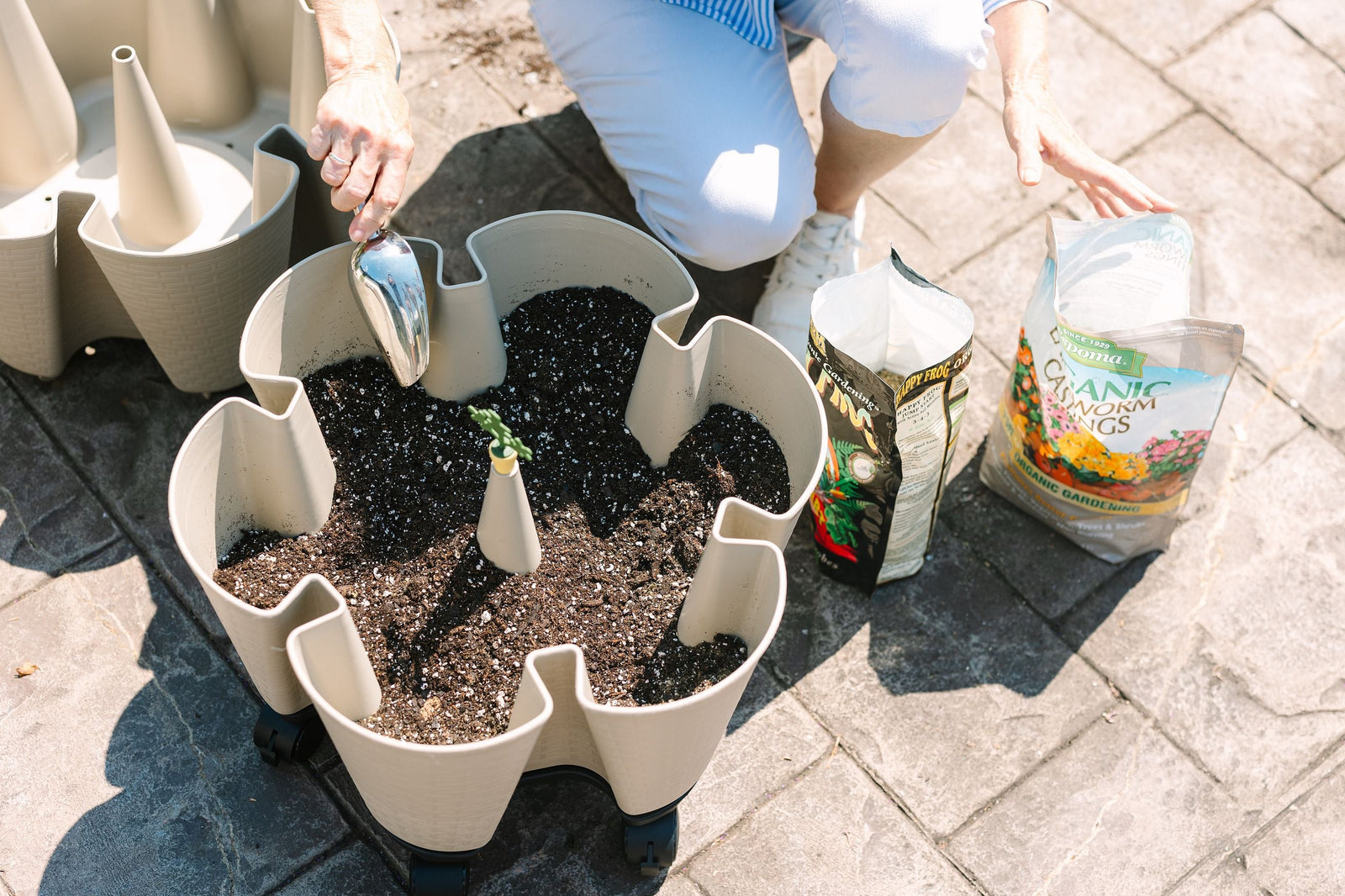
Depending on how you set up your initial soil blend — whether traditional potting soil alone or with added amendments like worm castings and granular fertilizer — will be part of how you schedule your “regular” feedings. Plants like bush beans don’t require much additional feeding, especially in amended soil. Heavy-feeder crops like tomatoes and brassicas would benefit from a regular liquid feed.

A good rule of thumb is to add diluted liquid feed to your GreenStalk every two to three weeks during peak growing season. This keeps a steady supply of nutrients available as your plants grow, flower, and produce. However, you can start with a single serving of liquid feed to your GreenStalk, see how each different crop responds over the next 2-3 weeks, and adjust.
It helps to set a reminder, pair it with a watering day, or tie it to a schedule that already works for you. The plants that get consistent nutrition tend to be the ones that reward you with a consistent harvest.
Organic vs. Synthetic: What's the Difference?
Once you start shopping for fertilizer, you'll notice two broad categories: organic and synthetic. Both supply the same core nutrients — nitrogen, phosphorus, and potassium — but they get there differently.
Organic fertilizers come from natural sources like bone meal, fish emulsion, or composted plant material. They tend to release nutrients more slowly and are generally gentler on plants, which means less risk of burning roots or leaves even if you're a little generous with application.
Synthetic fertilizers are more concentrated and act faster, which can be useful, but that concentration also means it's easier to overdo it. If you go this route, following label instructions closely matters more than it does with organic options.
You may also come across the term OMRI-listed on some organic products. OMRI (Organic Materials Review Institute) is an independent program that verifies a product meets USDA organic standards — it's a helpful shorthand when you see it. But it's a voluntary certification, which means a fertilizer can still be a clean, quality product without carrying that specific label. The most reliable approach is simply choosing a fertilizer from a company with a solid reputation, whether or not it happens to carry every possible certification.
The world of fertilizer labeling can get complicated fast, with plenty of overlap between categories and inconsistent regulation across brands. You don't need to master all of it, just know what you're buying and why.

A Simple Way to Get Started
If you're new to fertilizing, here's an easy starting point:
Pick one all-purpose liquid fertilizer with a balanced NPK ratio to start. This gives your whole GreenStalk a solid foundation.
Dilute and apply according to the label. Manufacturers calculate those ratios for a reason. Following the instructions is the easiest way to get good results.
Feed every two to three weeks during the growing season as part of your regular routine, if needed.
Adjust as your plants develop. Once fruiting or flowering plants like tomatoes and peppers start to bloom, consider shifting toward a fertilizer with a higher phosphorus or potassium ratio to support that next stage of growth.
That's really all it takes to get comfortable with NPK. You don't need to memorize every number or option on the shelf. Each season that passes will help you understand what your plants are asking for at each stage, and feed accordingly. Your GreenStalk will do the rest.