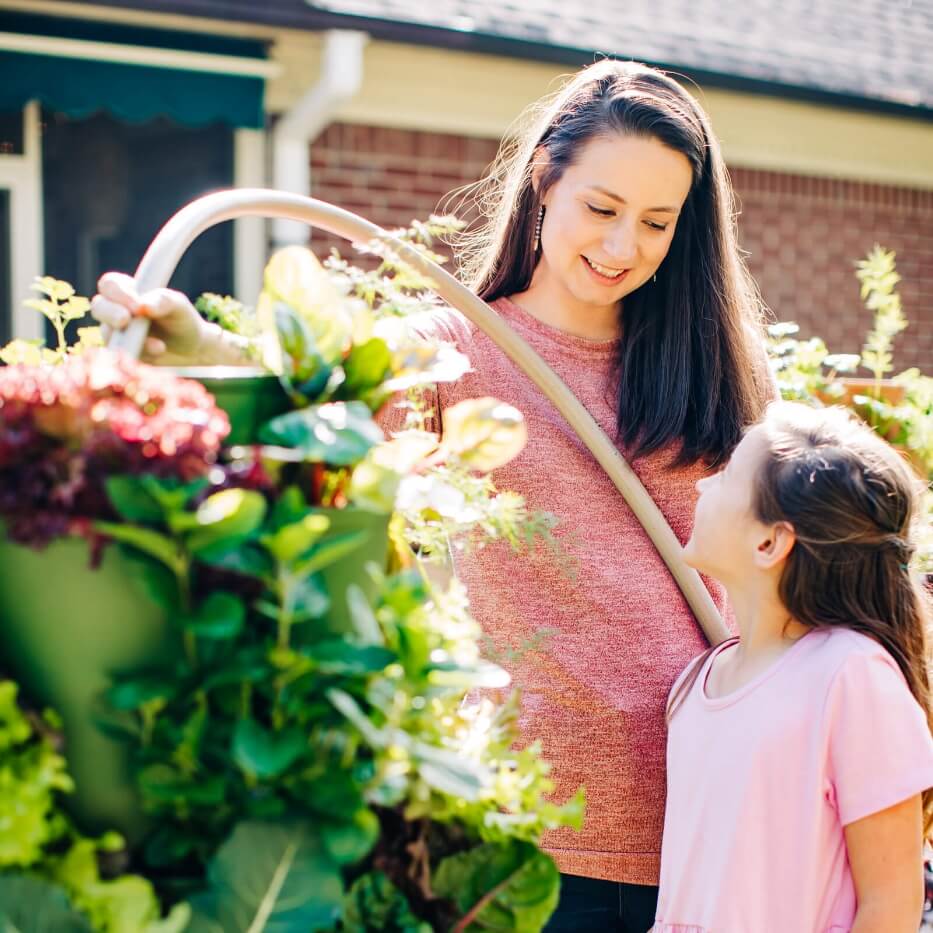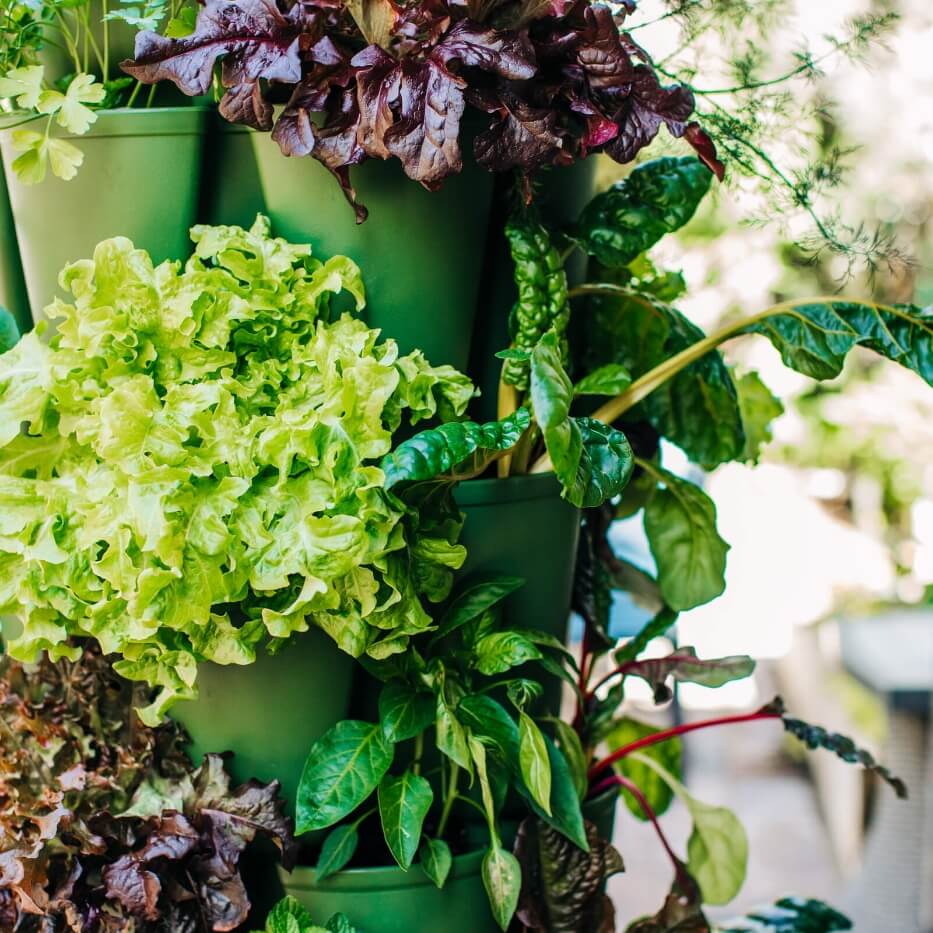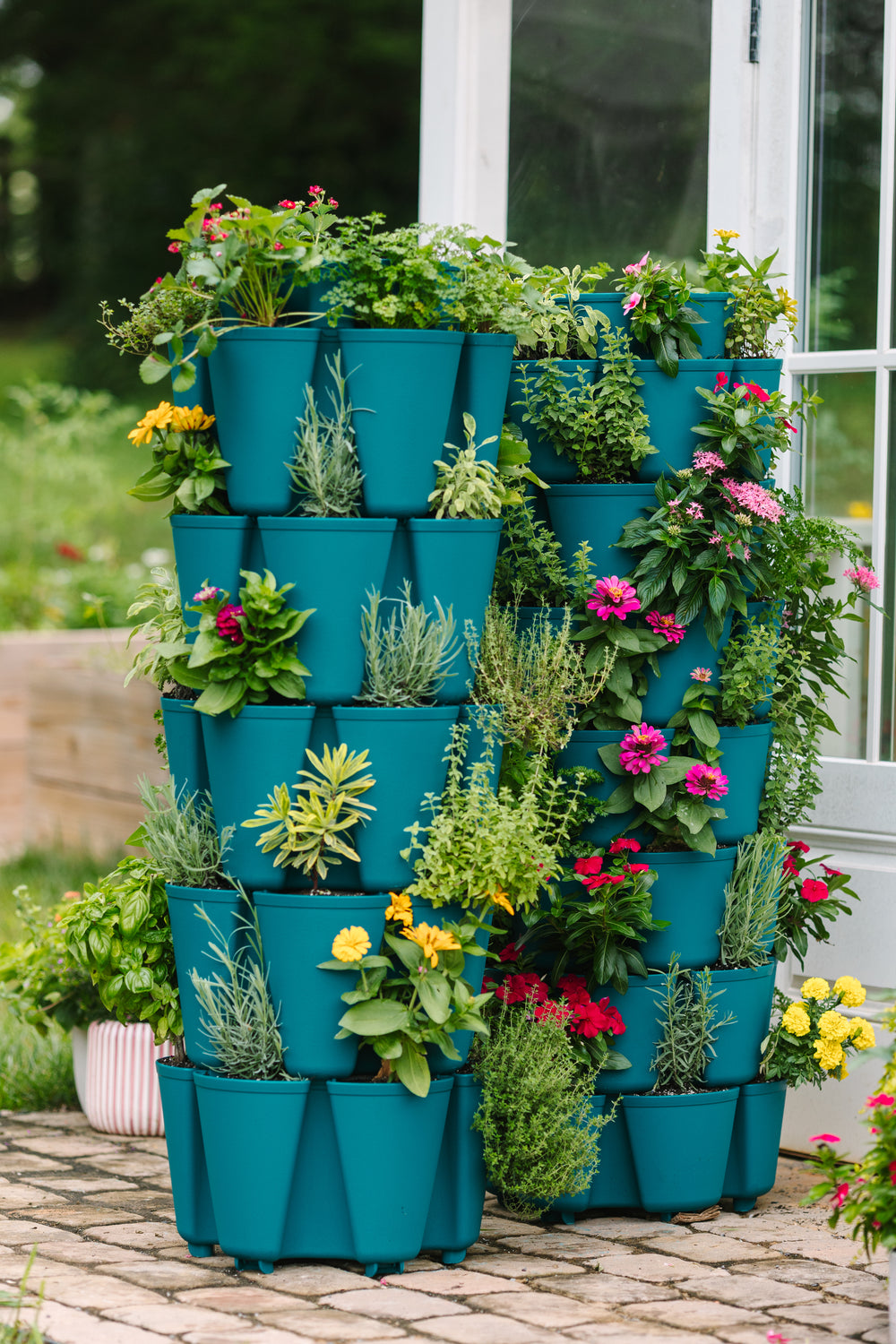



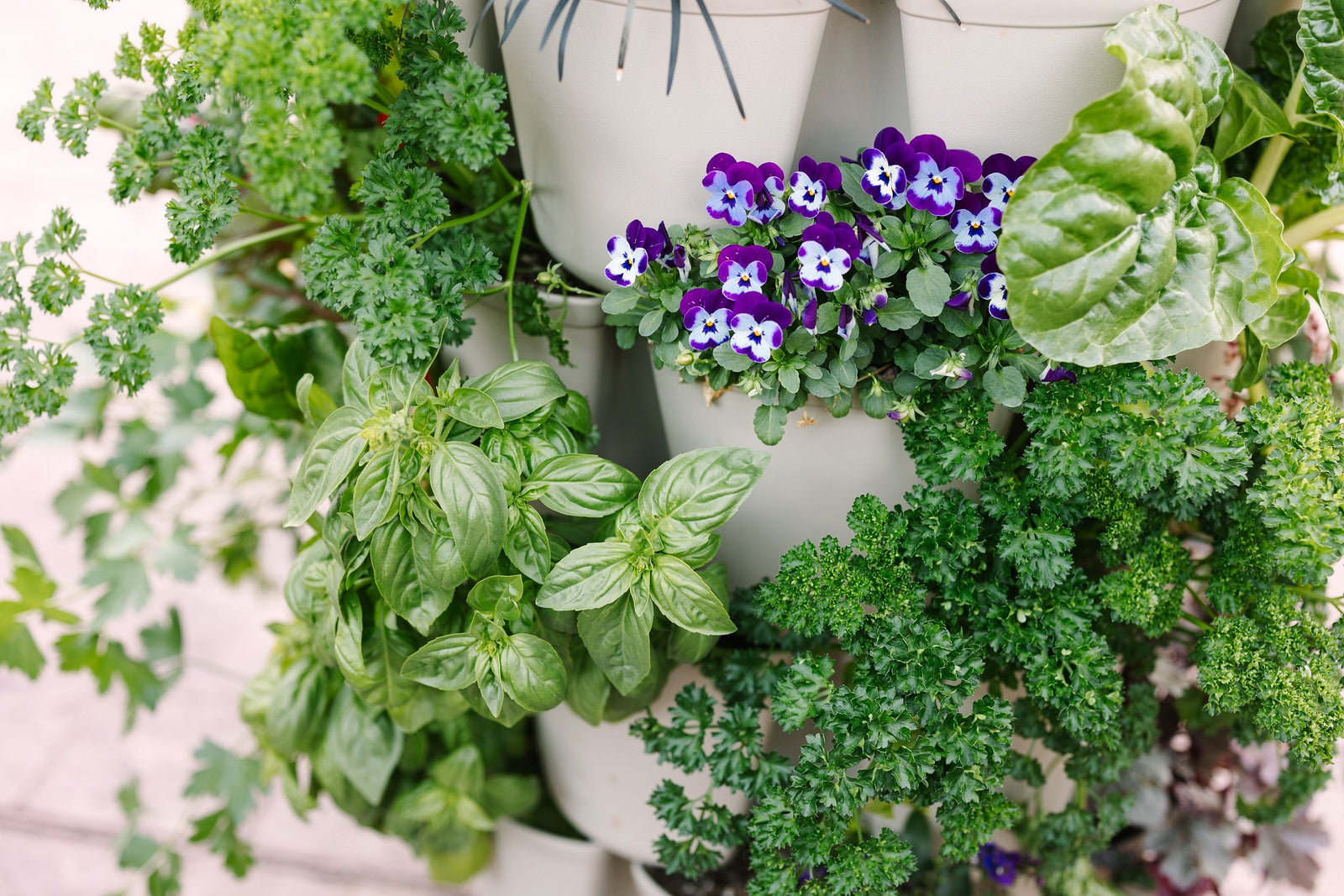

A good basil plant is a generous one. Plant a single pocket of your GreenStalk with basil, and by midsummer you'll have more leaves than any one recipe calls for. Basil earns its space many times over: torn over weeknight pasta, blended into pesto, folded into green goddess dressing, muddled into sparkling basil lemonade, and finishing a bowl of tomato soup or summer minestrone.
If you’ve ever spent $4 on a withered clamshell pack of basil and thought, I bet I could grow this, you’re right! Here’s how to add this generous herb to your GreenStalk Vertical Planter.

Basil Fast Facts:
Cool or warm weather: Warm season (frost-sensitive)
Size: Medium; 12-24 inches (some varieties up to 36)
Sun: 6-8 hours full sun
Days to maturity: 30-50 days
Water: Consistent moisture; avoid soggy soil
Original or Leaf GreenStalk: Either
GreenStalk level: Mid-to lower tiers, as basil can get bushy
Plant support needed: No
Planting & Growing
Basil thrives in warmth and sulks in cold. Wait until soil temperatures reach 70°F and nighttime lows stay above 50°F before planting outside. For a head start, sow seeds indoors 6 weeks before your last frost; otherwise, direct sow into your GreenStalk pockets once frost danger has passed. You Genovese seeds are included in our Organic Warm Weather Seed Bundle and Kim's Kozy Korner Seed Bundle, if you’d like a good place to start.
Plant seeds ¼ inch deep. Germination takes 5 to 14 days in warm soil. Stick to one plant per pocket — with room to spread, basil grows into a bushy, branching plant that produces all season.


Best Basil Varieties for Your GreenStalk
Basil comes in dozens of cultivars, each with its own personality. Here are the ones worth knowing.
Genovese (Sweet Basil) — The pesto standard. Large, fragrant leaves with that classic clove-meets-anise basil flavor. If you only grow one, grow this.
Purple Basil — Varieties like Dark Opal offer deep burgundy foliage with a mild, slightly spicy flavor. Beautiful in salads and gorgeous for infusing vinegars pink.
Thai Basil — Anise and licorice notes, sturdy purple stems, and narrow leaves that hold up to high-heat cooking. Essential for stir-fries, pho, and spring rolls.
Lemon Basil — Bright citrus aroma. Pairs beautifully with fish, fresh fruit, summer cocktails, and herbal teas.
Holy Basil (Tulsi) — A different species (Ocimum tenuiflorum) with a peppery, clove-like flavor. Traditionally valued in Ayurvedic practice as a calming herbal tea rather than a cooking herb. Worth its own pocket if you'd like to grow your own tea.

Watering & Fertilizing
Basil likes consistent moisture without sitting in soggy soil. Water when the top inch feels dry — usually every 1-2 days in warm weather, more often in a heatwave.
At planting, mix in a granular fertilizer and worm castings as you would for any GreenStalk setup. After that, basil is a light feeder; too much nitrogen dulls the flavor.
Pinch, Pinch, Pinch
Basil is more heat-tolerant than cilantro or dill, but it will still bolt eventually. Pinching keeps it leafy and productive much longer.
Once your plant has two or three sets of true leaves, pinch the top of the main stem just above a leaf node. This redirects energy into branching, turning one plant into a productive monster. Harvest the same way going forward — always above a leaf node, never more than a third at a time.
When flower buds appear, pinch them off — cut 1.5 to 2 inches below the bud, not just at the tip. For more on managing bolt across your herbs, see our guide on why your herbs bolt too soon and how to prevent it.

Harvesting and Putting It to Work
Harvest in the morning after the dew dries, when basil's essential oils are at their peak. Use fresh leaves the same day if you can, or store stem-down in a glass of water on the counter. Skip the fridge; cold turns basil leaves black.
When the harvest outpaces what you can use fresh, basil takes well to preserving. Pesto freezes beautifully in ice cube trays for winter dinners, and holy basil, lemon basil, and Genovese all dry well for teas and seasoning blends. For a full breakdown, see our step-by-step guide to preserving herbs.
One basil plant in one pocket can keep your kitchen in pesto, dressings, soups, and fun, flavorful drinks for months. Pinch often, water consistently, and try a few varieties to see what works best for your palette. Whether you build an Italian-cuisine tower, a tea garden anchored by tulsi, or a sampler of every basil you can find, you’ll be handsomely rewarded!